
Your Marquee Wedding Timeline: Month-By-Month Planning Guide
Your marquee wedding isn’t just a party under a tent; it’s an entire atmosphere. A space that feels thoughtful, seamless, and completely reflective of you. But between styling decisions, vendor coordination, logistics and timelines, it’s easy to feel overwhelmed by all the moving parts.
That’s where this guide comes in. Below is a realistic month-by-month planning framework based on how experienced teams approach marquee weddings. Think of it as clarity without the chaos, helping you stay organised, make confident decisions, and create a wedding that looks incredible and runs smoothly on the day.

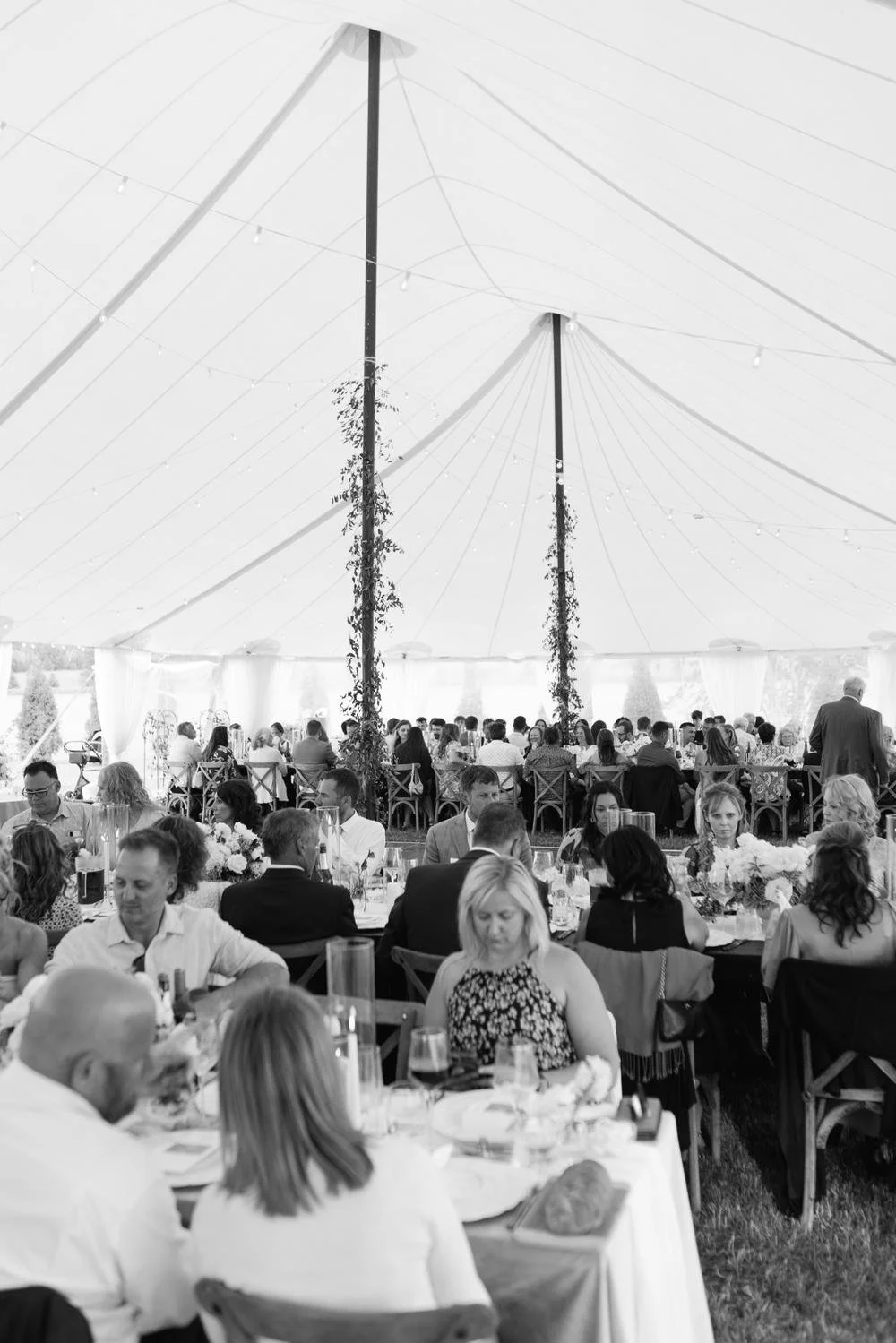
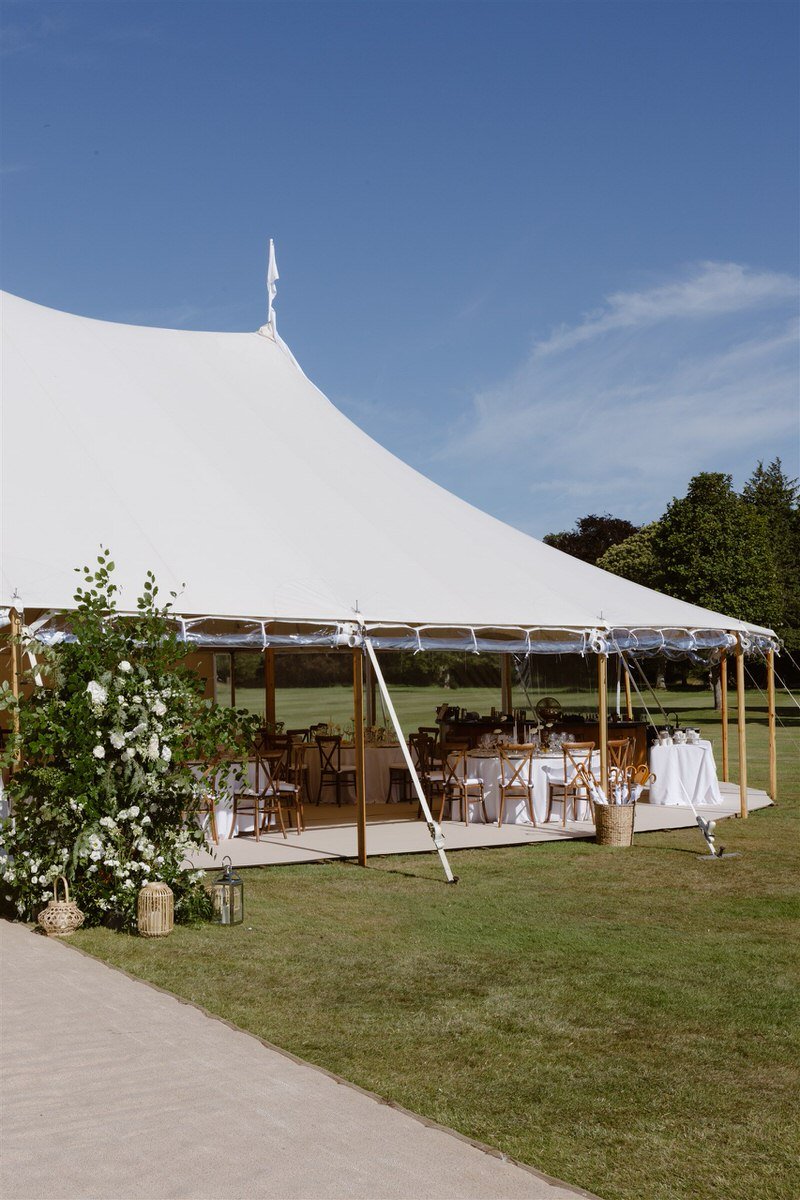
6 to 8 Months Before: Laying the Foundations
This is where strong marquee wedding planning begins.
At this stage, the focus is on the big logistical decisions that everything else depends on.
Key priorities include:
Confirming marquee size, layout, and site suitability
Assessing ground levels and access points for trucks, trailers (for marquee install crew, furniture delivery)
Planning power supply, whether mains or generator
Arranging toilet hire and placement
Deciding on flooring requirements
Planning heating or cooling depending on season
Locking in lighting requirements inside and outside the marquee
Confirming catering requirements, including power and water needs
3 to 5 Months Before: Refining the Logistics
Once the foundations are in place, planning becomes more detailed and specific.
During this phase, couples should focus on:
Confirming vehicle access and supplier routes
Planning parking and guest arrival flow
Booking waste management and bins
Organising drink storage or chiller solutions
Reviewing lighting coverage across all areas including to toilets and guest parking
This is also the stage where experienced teams often recommend a site visit. Walking the site early allows potential issues to be identified and solved well before they become problems.
This is also the stage where many couples begin to realise just how interconnected the logistics are. One decision often affects several others, which is why having experienced guidance can save a lot of back-and-forth.
2 to 3 Months Before: Layout and Contingency Planning
This is when the wedding marquee really starts to take shape.
At this point, you should be:
Finalising your floor plan
Creating a Plan A and Plan B for weather
Reviewing seating layouts and guest flow
Considering how spaces transition throughout the day
Having a wet weather option is not pessimistic. It is professional planning. Couples who do this early feel far more relaxed when the forecast inevitably becomes a topic of conversation.

1 to 2 Months Before: Coordination and Communication
This is where timeline planning becomes essential.
During this stage:
Vendor logistics should be confirmed
Arrival and departure times locked in
Power requirements double checked
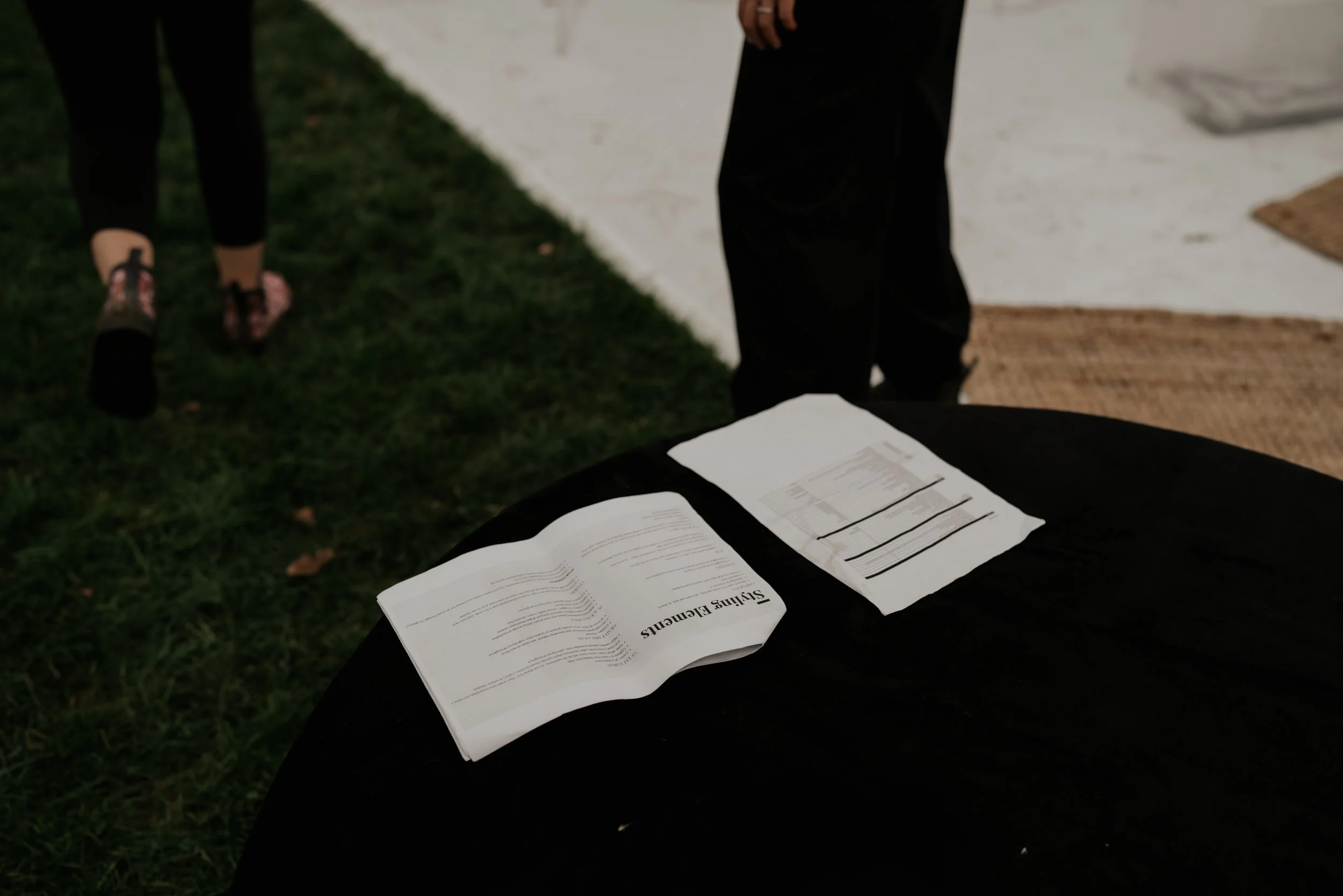
A detailed runsheet created
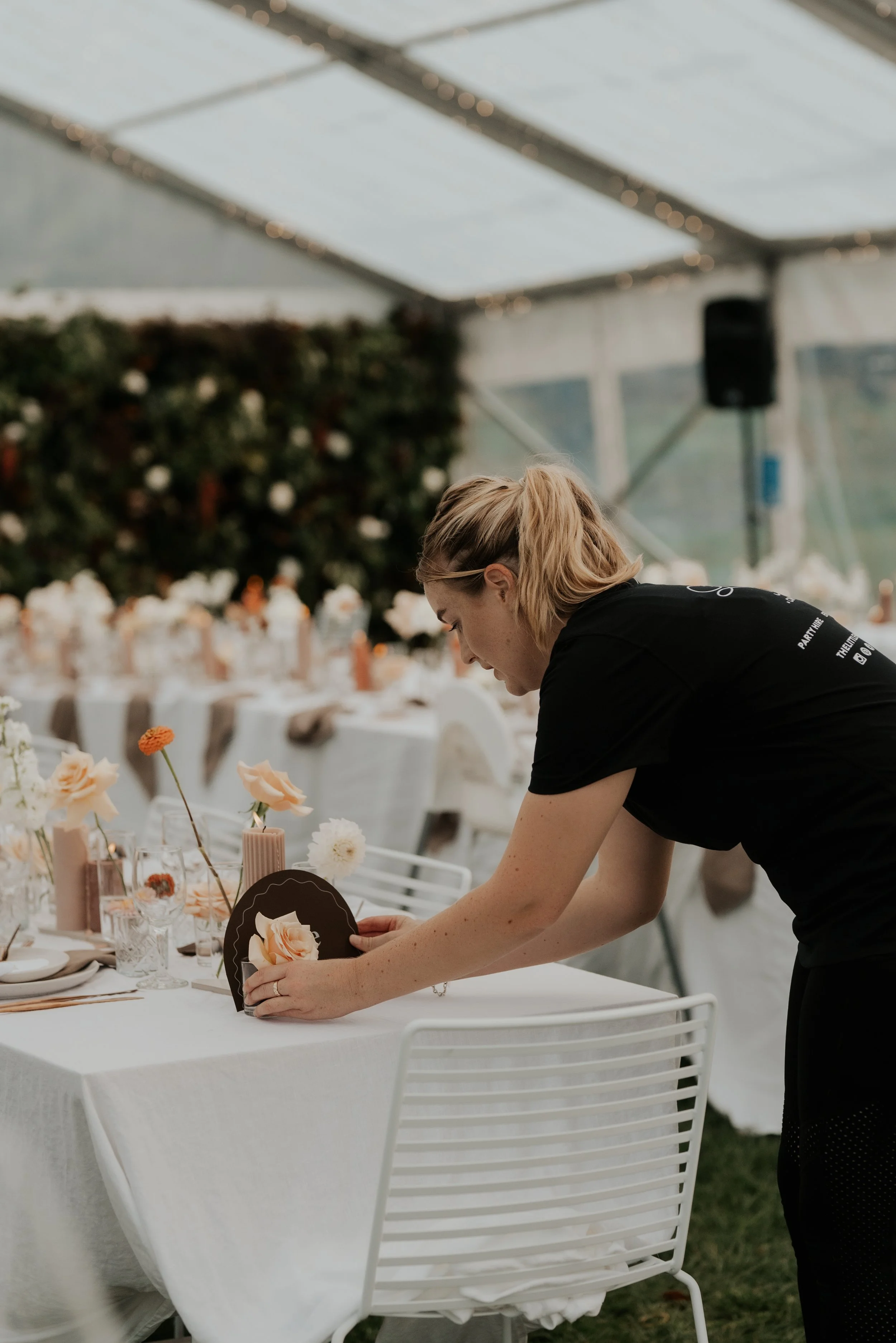
Personal styling items prepared and organised
Organising and sorting any personal purchases e.g. arrange name cards into order, batteries in candles or cameras etc.
If you are working with a Month Of Coordinator, this is often when they step in more actively. If you are managing things yourself, clear communication becomes absolutely vital.
A wedding marquee relies on every supplier knowing exactly where to be, when to arrive, and what they need access to.
The Week Before: Setup and Testing
The final week is not the time for big decisions. It is the time for execution.
This typically includes:
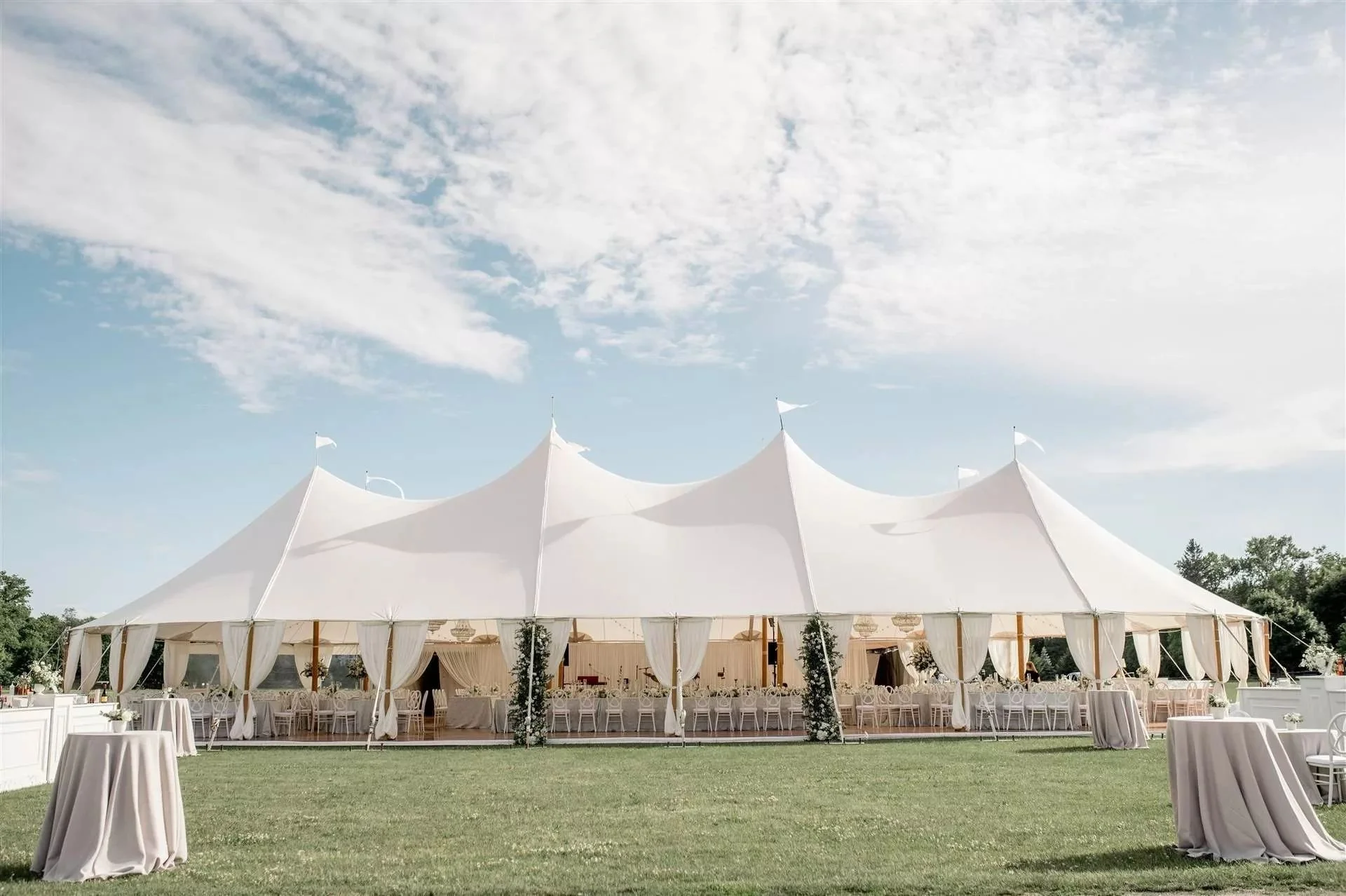
Overseeing marquee installation
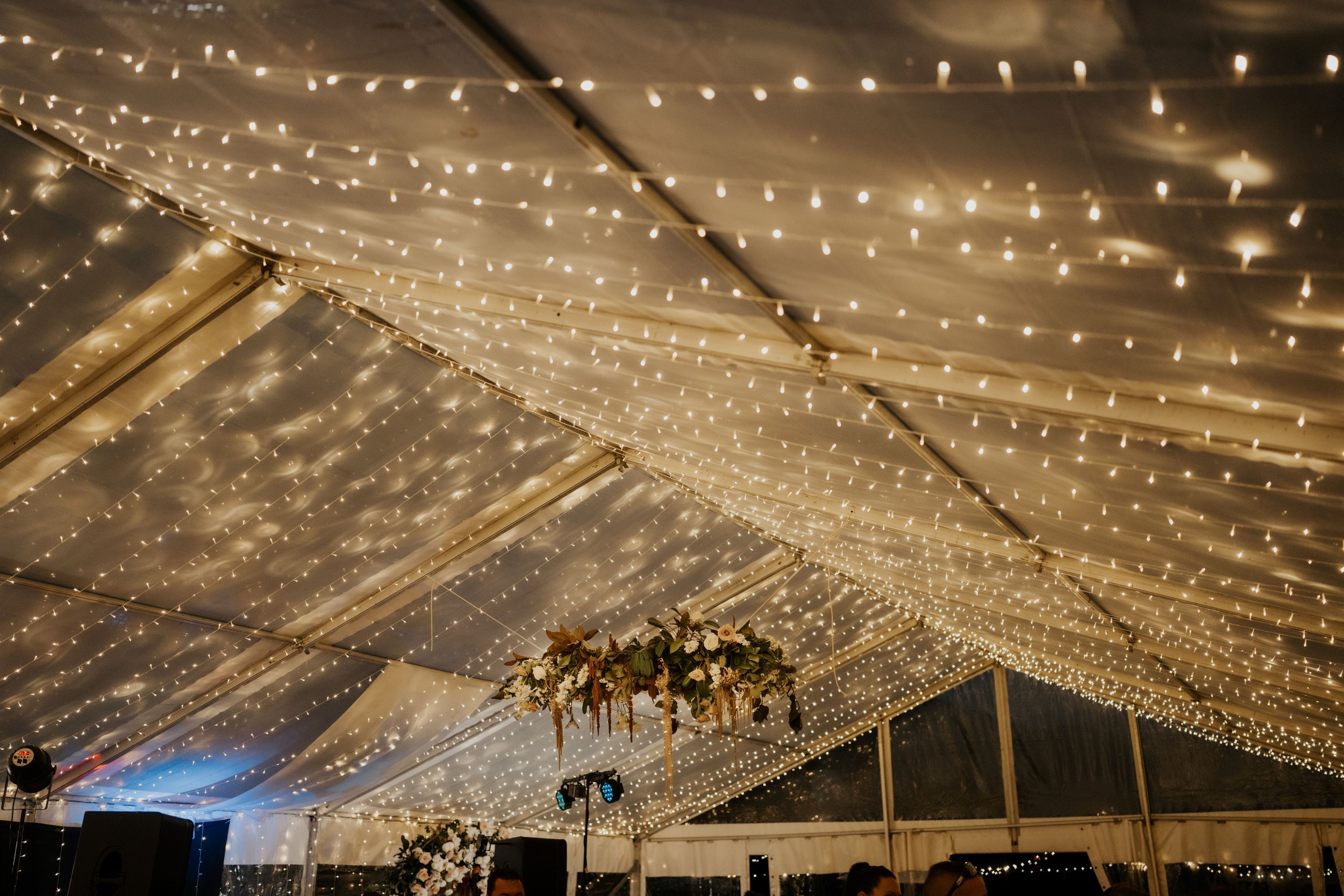
Installing lighting and testing all power
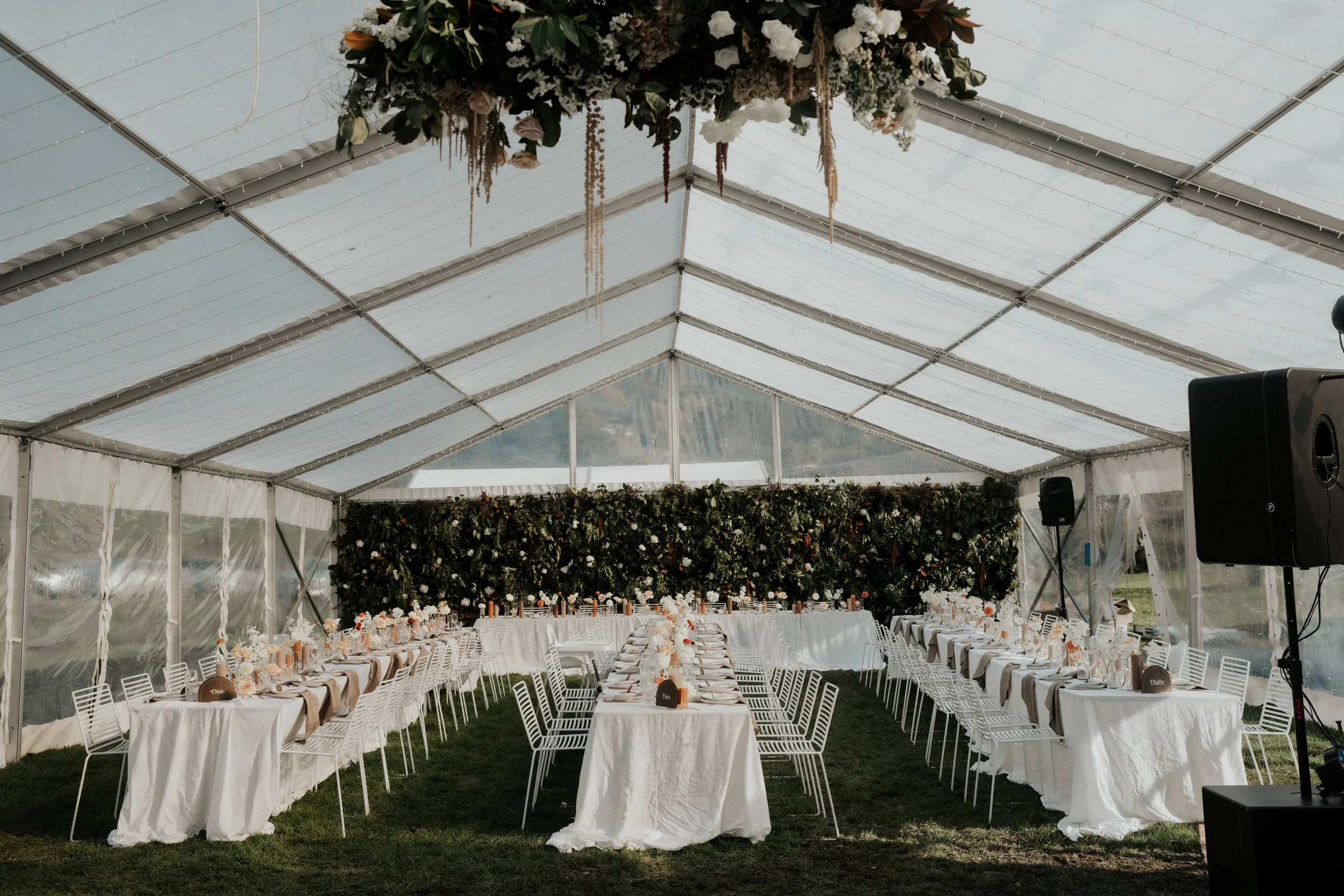
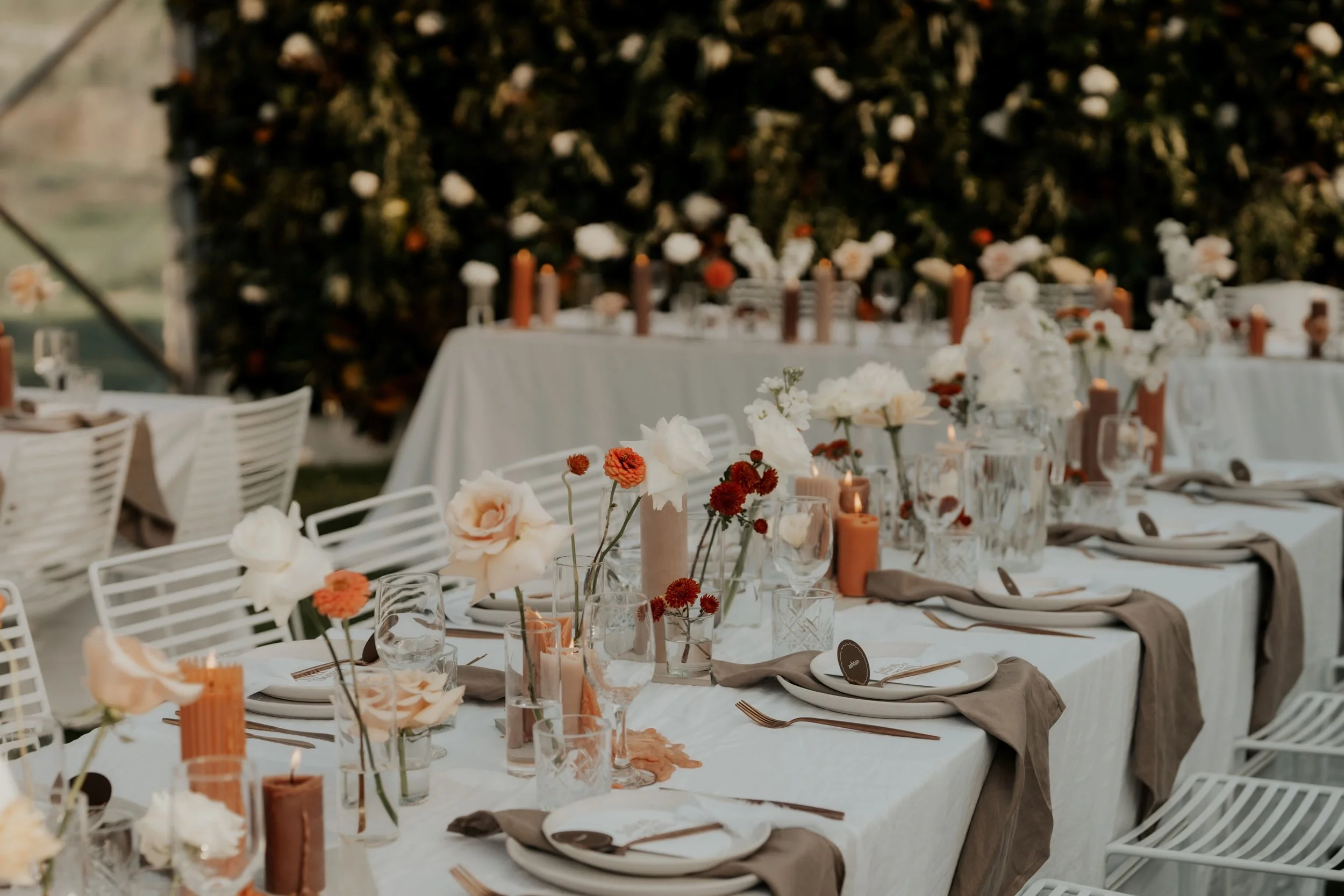
Setting up furniture, décor, and styling
Confirming toilet placement and servicing
Clear signage for utilities placed e.g. toilet and parking signs
Walking through the layout and making small adjustments
Power, lighting, and heating should always be tested before the wedding day. This is especially important if you are using generators or temporary power solutions.
The Day After: Packdown Planning Matters Too
One of the most overlooked parts of a marquee wedding timeline is what happens after the celebration.
Packdown requires:
Furniture being returned as delivered e.g. chairs stacked, table tops wiped down and all items back in tubs and boxes as they were delivered
Cleaning of hired items such as candle holders, vases, cutlery, plates and glassware (or ask to add this service on)
Coordinating collection times - either where vendors are collecting from site, or you need to return
Clearing personal items and gifts
Planning for packdown early ensures the end of your wedding weekend feels calm rather than chaotic. You don’t want to be left with this - if you can add this into your wedding budget you will certainly thank yourselves later!
Why Couples Underestimate Marquee Wedding Timelines
Couples underestimate marquee wedding timelines because so much of the work happens behind the scenes.
Guests arrive to a beautiful, seamless space, but what they don’t see is the planning, coordination, contingency management, supplier logistics, and careful sequencing that made it all come together effortlessly.
A marquee wedding isn’t necessarily more difficult than a venue wedding. It simply involves more moving parts and more decisions early on. But when planned properly, it gives you far more flexibility, creativity, and freedom to create something that feels genuinely personal to you both- not just a wedding package repeated weekend after weekend.
Final Thoughts on Planning Your Marquee Wedding Timeline
If you’re considering a marquee wedding, start planning earlier than you think you need to. Giving yourself more time means you can make informed decisions, refine the details as you go, and avoid the pressure of rushed last-minute choices.
A well-planned marquee wedding never feels reactive. It feels calm, intentional, and thoughtfully executed because every detail has been considered well before the day arrives.
And that’s the goal. Not to spend your wedding managing timelines or solving problems, but to walk into a space that feels effortless, knowing everything has already been taken care of.
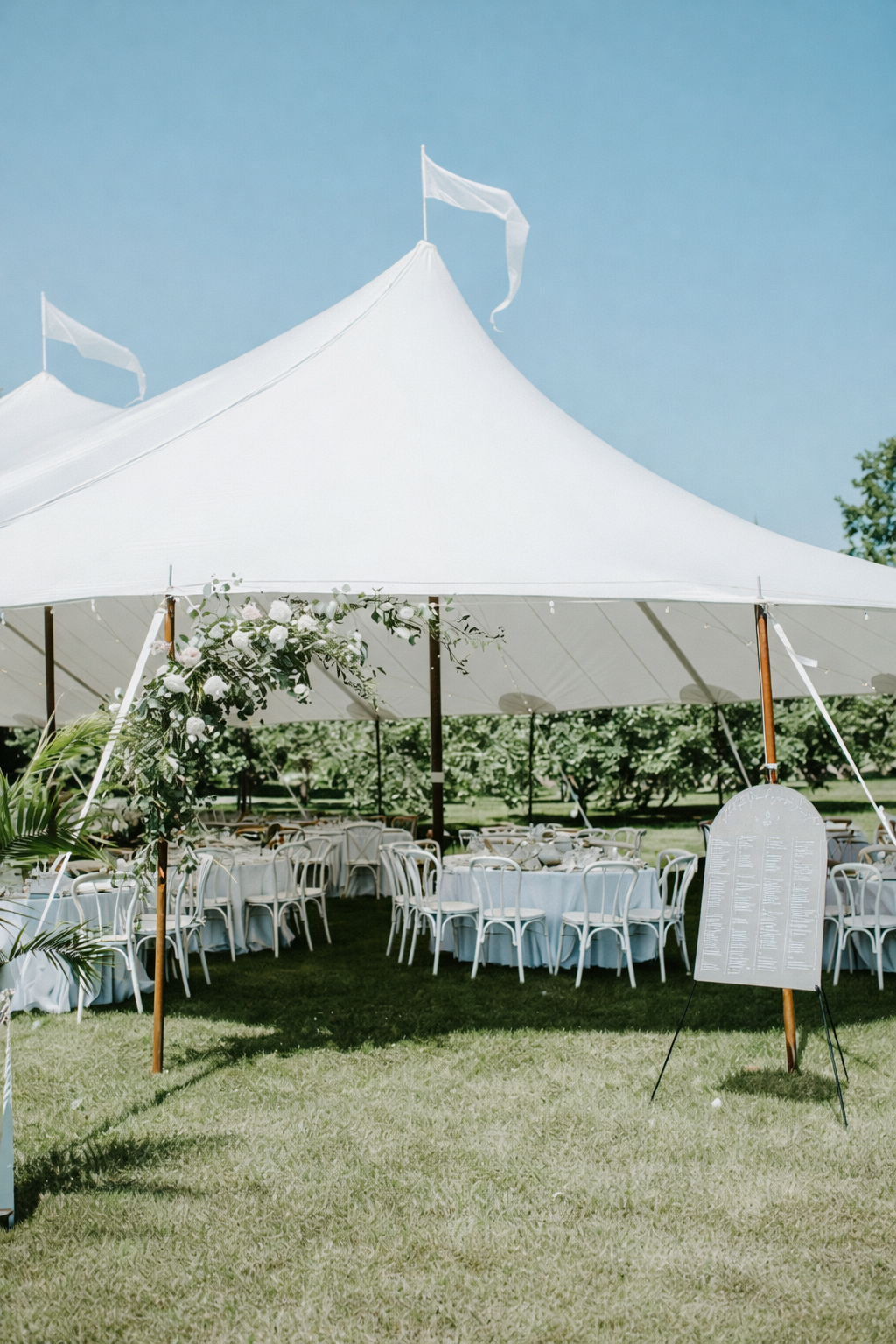

Planning a marquee wedding? Here’s the reality: you’re not just planning a wedding, you’re building an entire venue from scratch. From weather plans and power to guest comfort and forgotten logistics, there’s a lot more to think about than your Pinterest board suggests. We’re sharing the most overlooked (but essential) marquee wedding details so you can avoid last-minute stress and create a seamless, stylish celebration that actually feels effortless.