
The Ultimate Guide to Wedding Draping: How to Completely Transform Your Wedding Space
There are some wedding styling choices that add a pretty finishing touch, and then there are the ones that can completely change a space.
Draping is one of them.
It can soften a marquee, cover a wall you really wish wasn’t there, make a huge venue feel more intimate, divide your wedding into different zones and turn a blank area into one of the biggest features of the day. Basically, fabric can do a LOT.
But, like most things in weddings, Pinterest can make it look deceptively simple. Beautiful wedding draping isn’t just metres of fabric thrown over a frame and a quick fluff on the way out. There’s a lot to consider, from the fabric and placement to how it falls, what’s happening around it and what you actually need the draping to achieve.
So if you’re planning a Christchurch or Canterbury wedding and have found yourself saving draping inspiration without really knowing what you need, this one’s for you.
Let’s get into it.
First things first, what actually is wedding draping?
Wedding draping is the use of fabric to soften, define, divide or completely transform a space. And we think that last part is important.
Good draping has a job to do. It might soften the structure of a marquee, create a focal point, divide a large space into different zones, cover an area you don’t particularly want featuring in every wedding photo, add texture and softness, or make a large venue feel more intimate.
It can also be the thing that visually brings several parts of your styling together.
When we’re looking at wedding draping, we’re thinking about what your guests see when they walk in, where their eye naturally goes, how they’ll move through the space, where the main focal points are and how everything works together.
Because we’re big on weddings looking incredible, but we’re equally big on them actually working well.
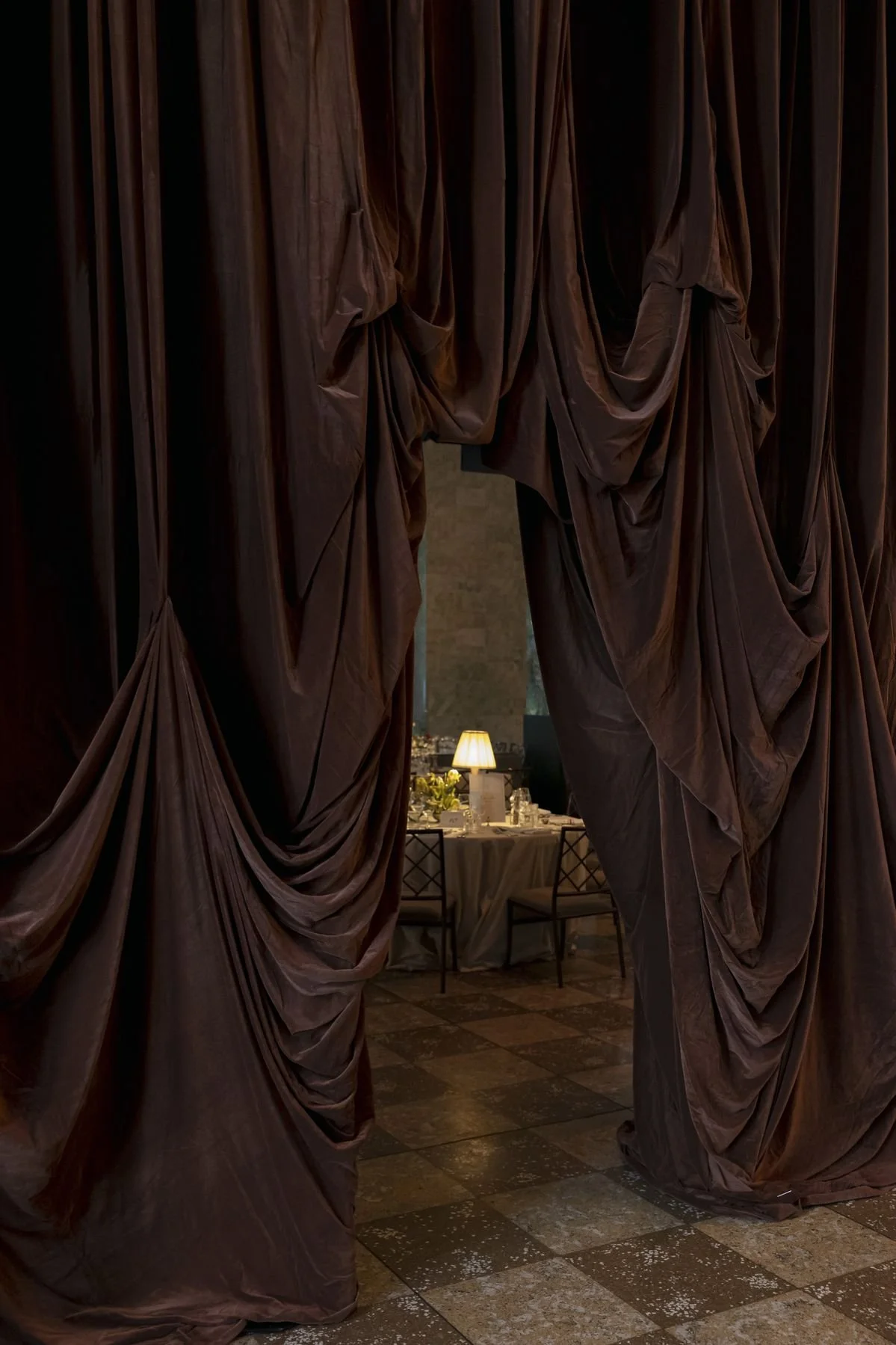
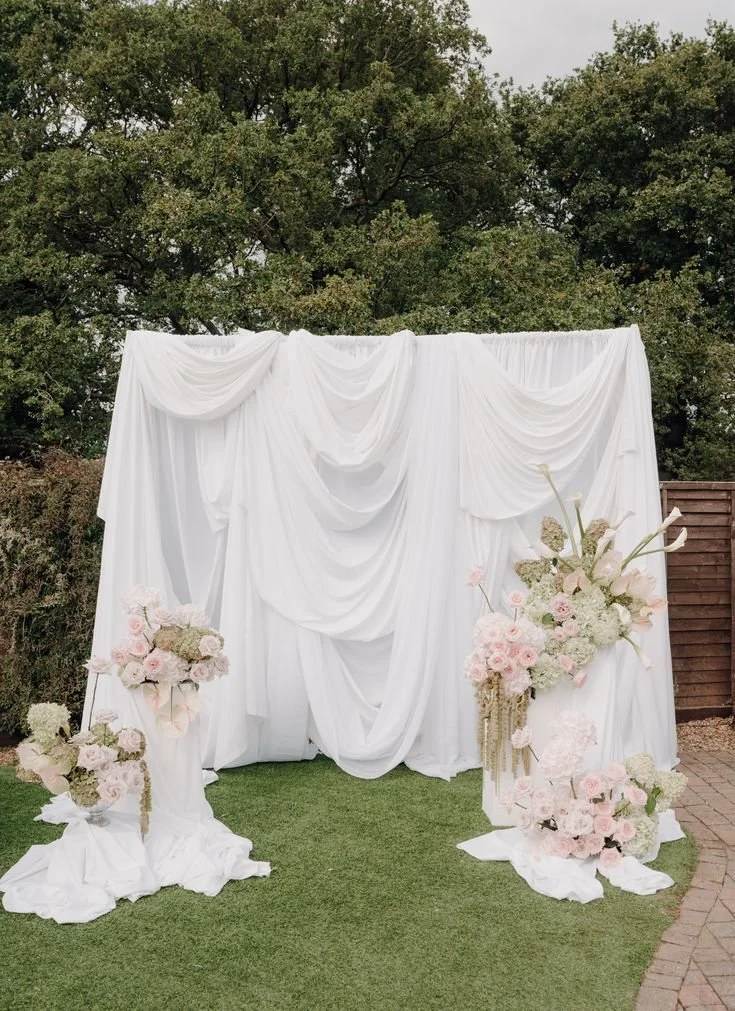
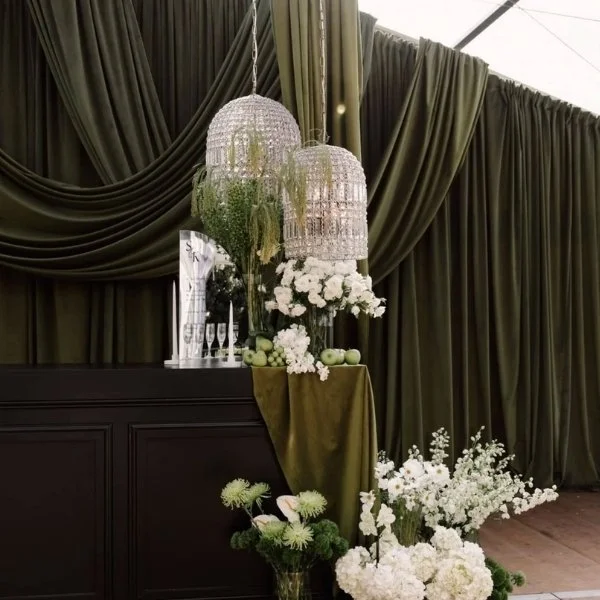
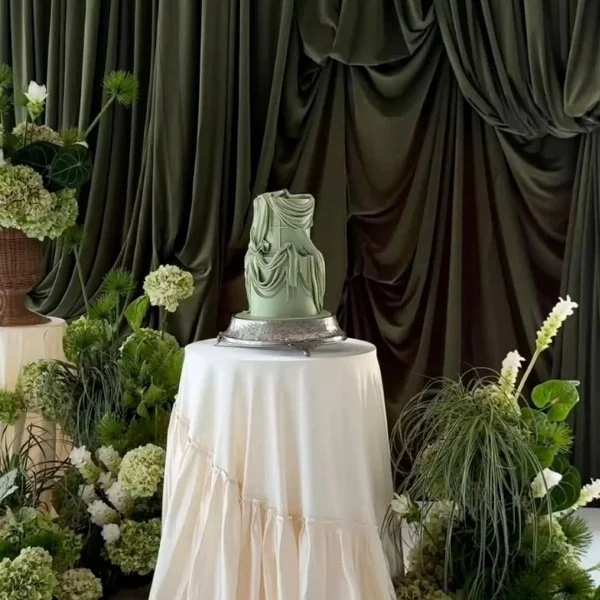
Why does draping make such a big difference?
A venue or marquee gives you the bones of your wedding space. Draping lets us play them up.
Fabric adds softness, movement and texture. It can make a huge space feel smaller, make a functional area look intentional and completely change the atmosphere without needing to fill every available surface with décor.
It’s particularly clever for weddings because one space often needs to do a lot. You might have dining at one end of your marquee, lounging somewhere else, plus a bar, dance floor and all the other fun bits happening within the same footprint.
Instead of everything feeling like one giant open room, draping can help us create separate areas that still feel connected.
Pretty AND practical. Our favourite combination.
So, what wedding draping do we actually offer?
There are approximately 847 different draping ideas waiting for you on Pinterest.
We don’t offer all of them, and we’re not going to pretend we do.
What we do offer are several really versatile wedding draping options that allow us to create focal points, soften marquees, divide spaces and completely change the feeling of a venue.
Let’s start with the one most people probably picture first.
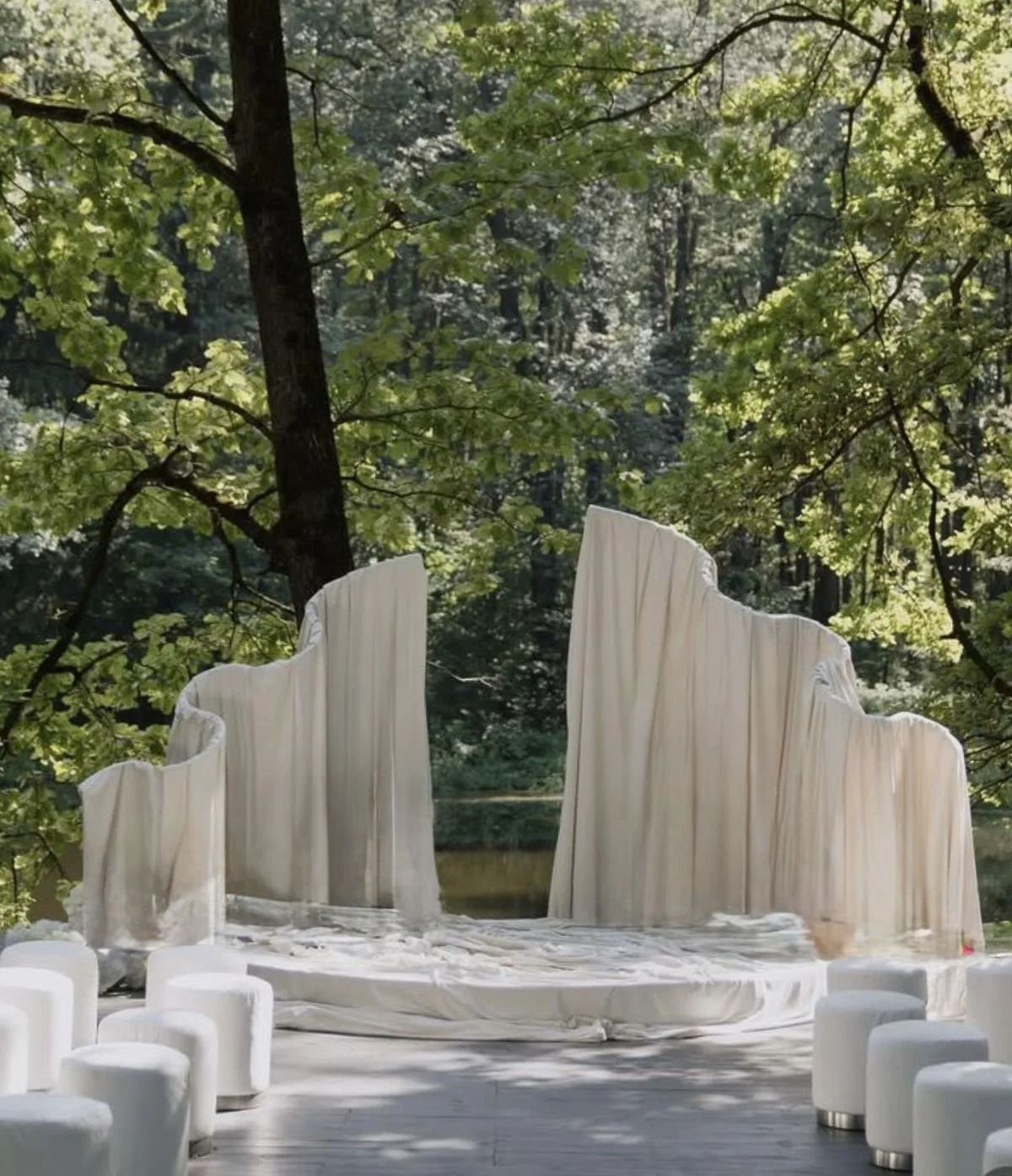
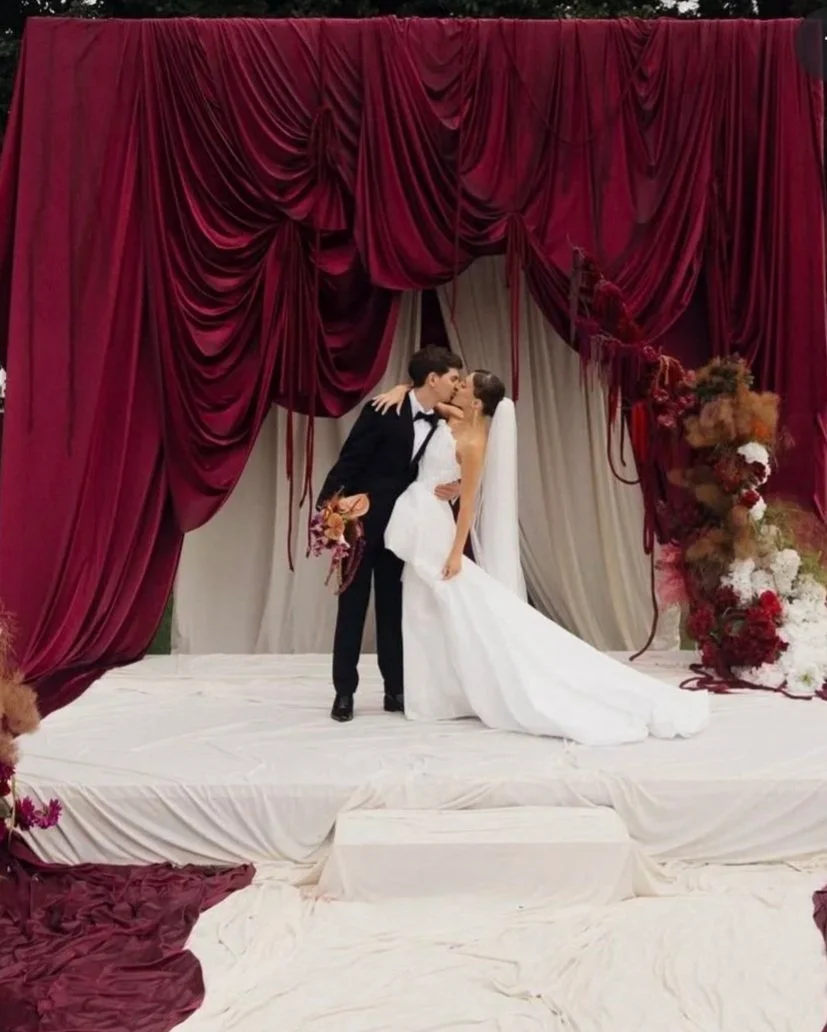
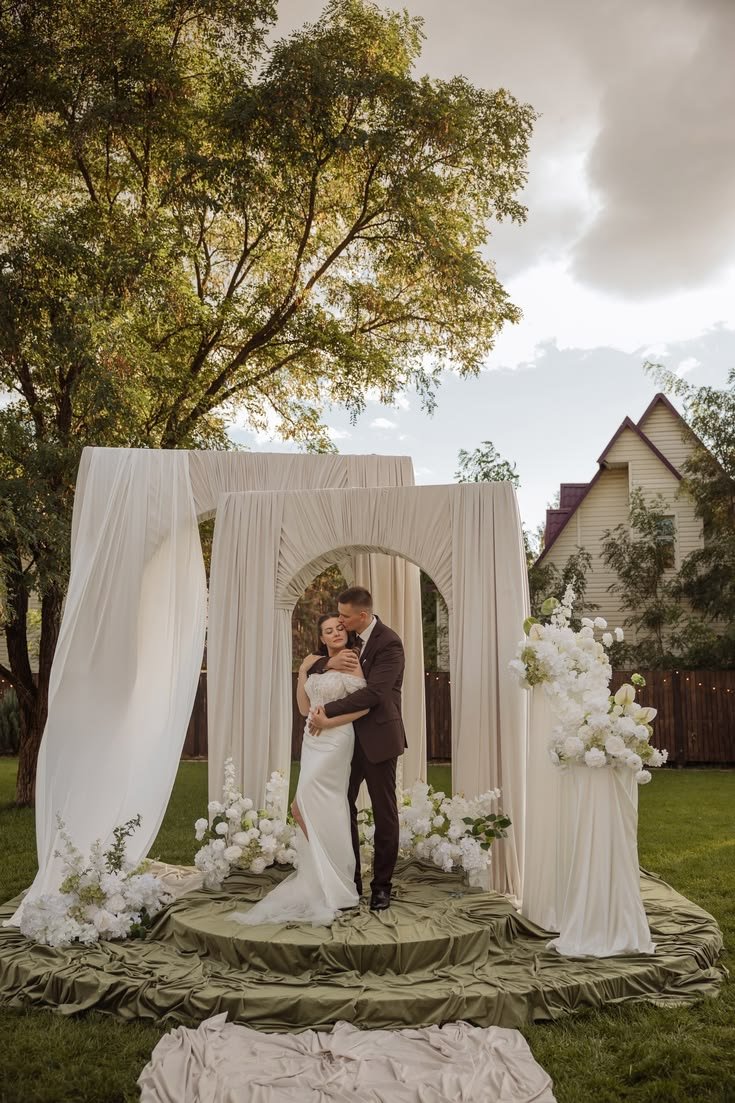
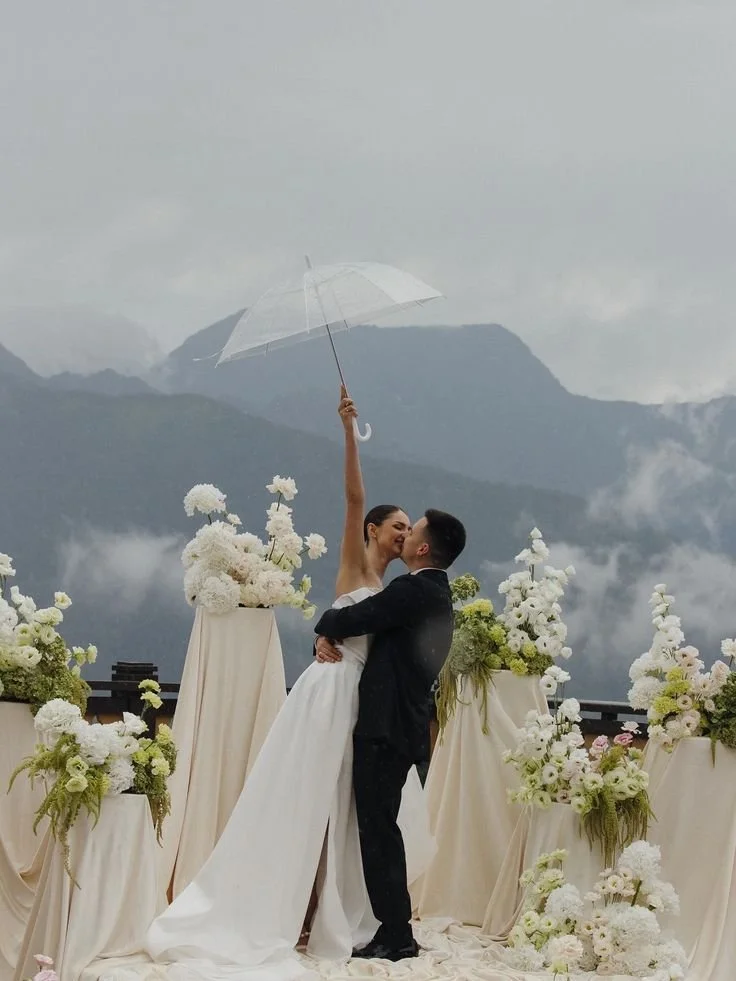
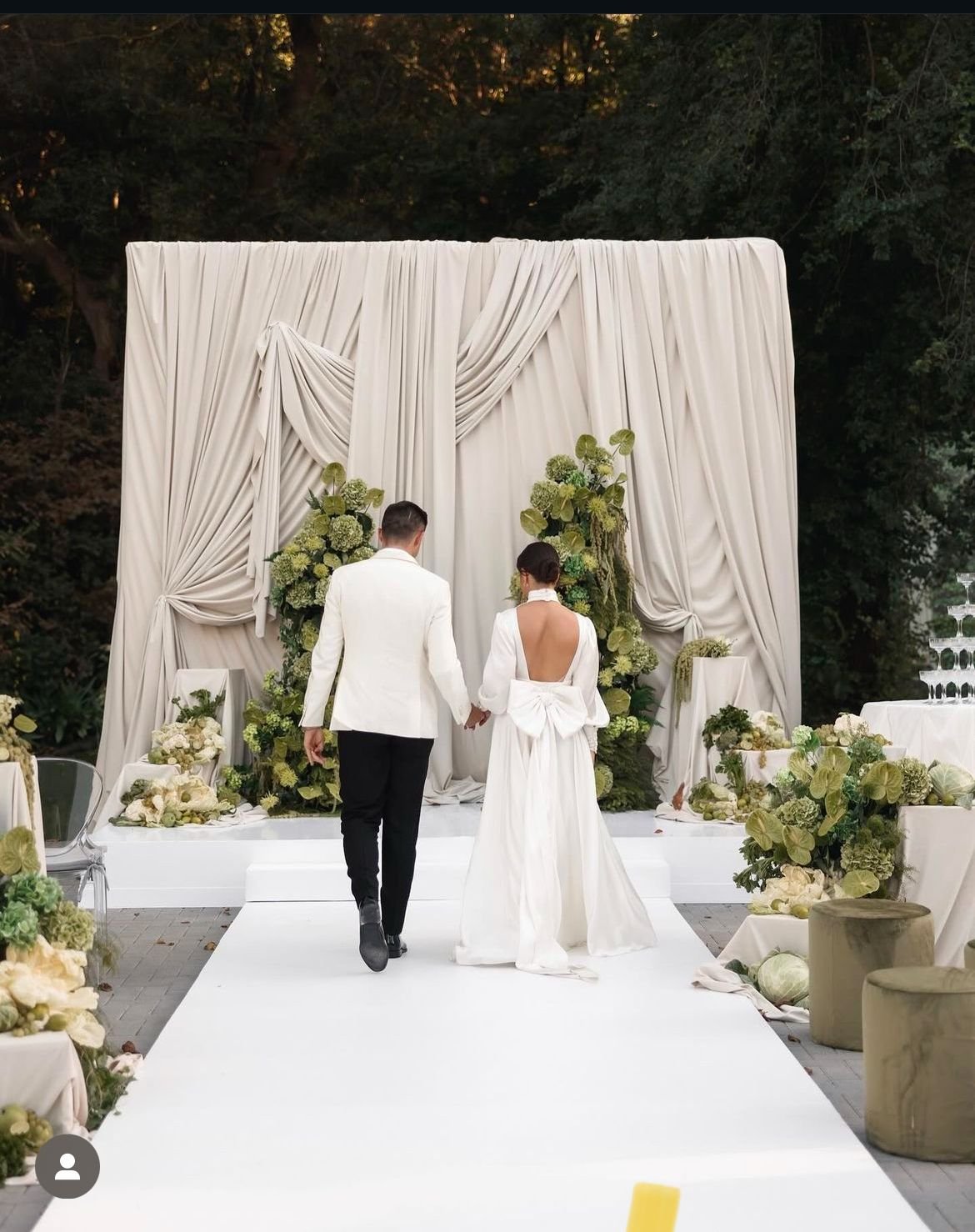
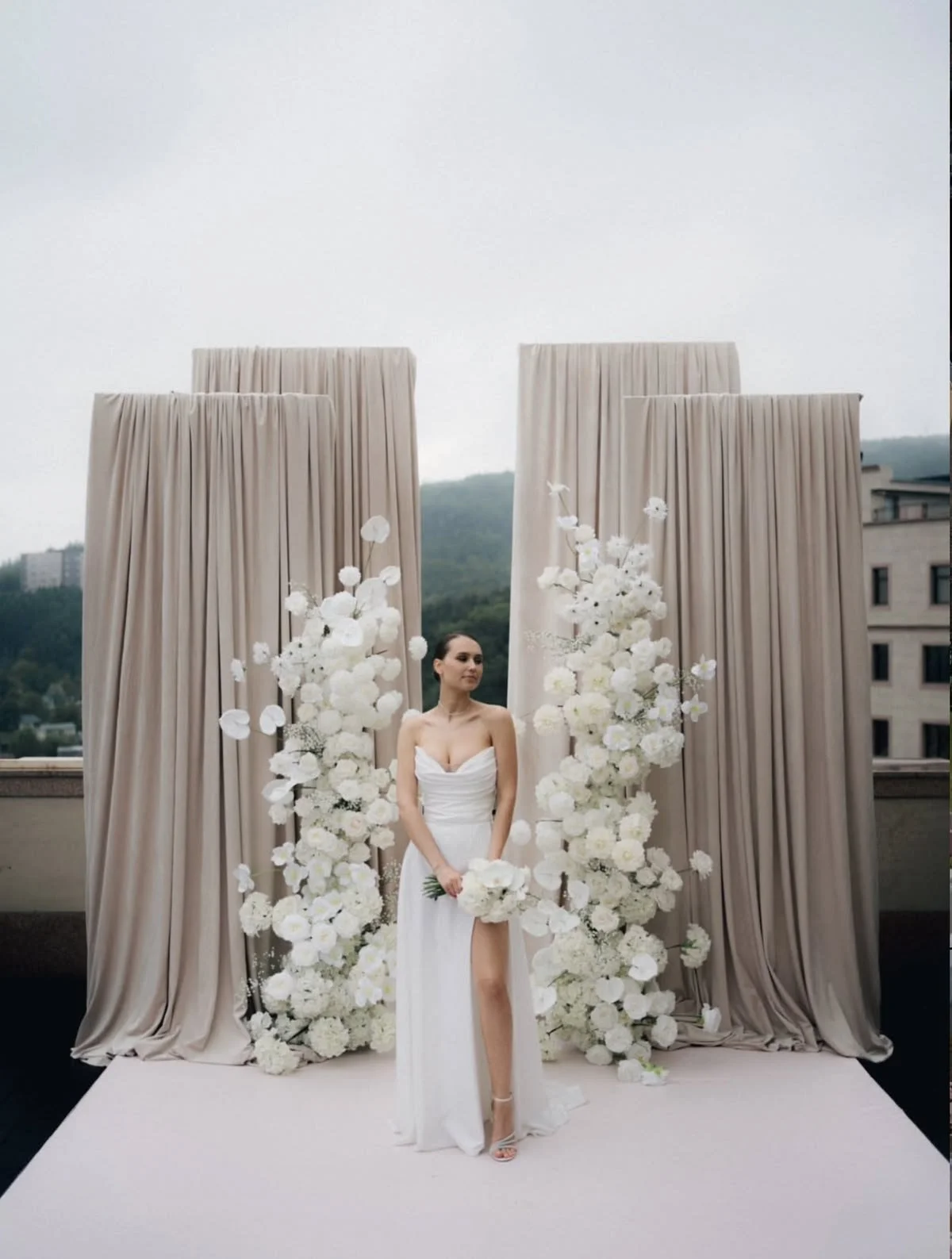
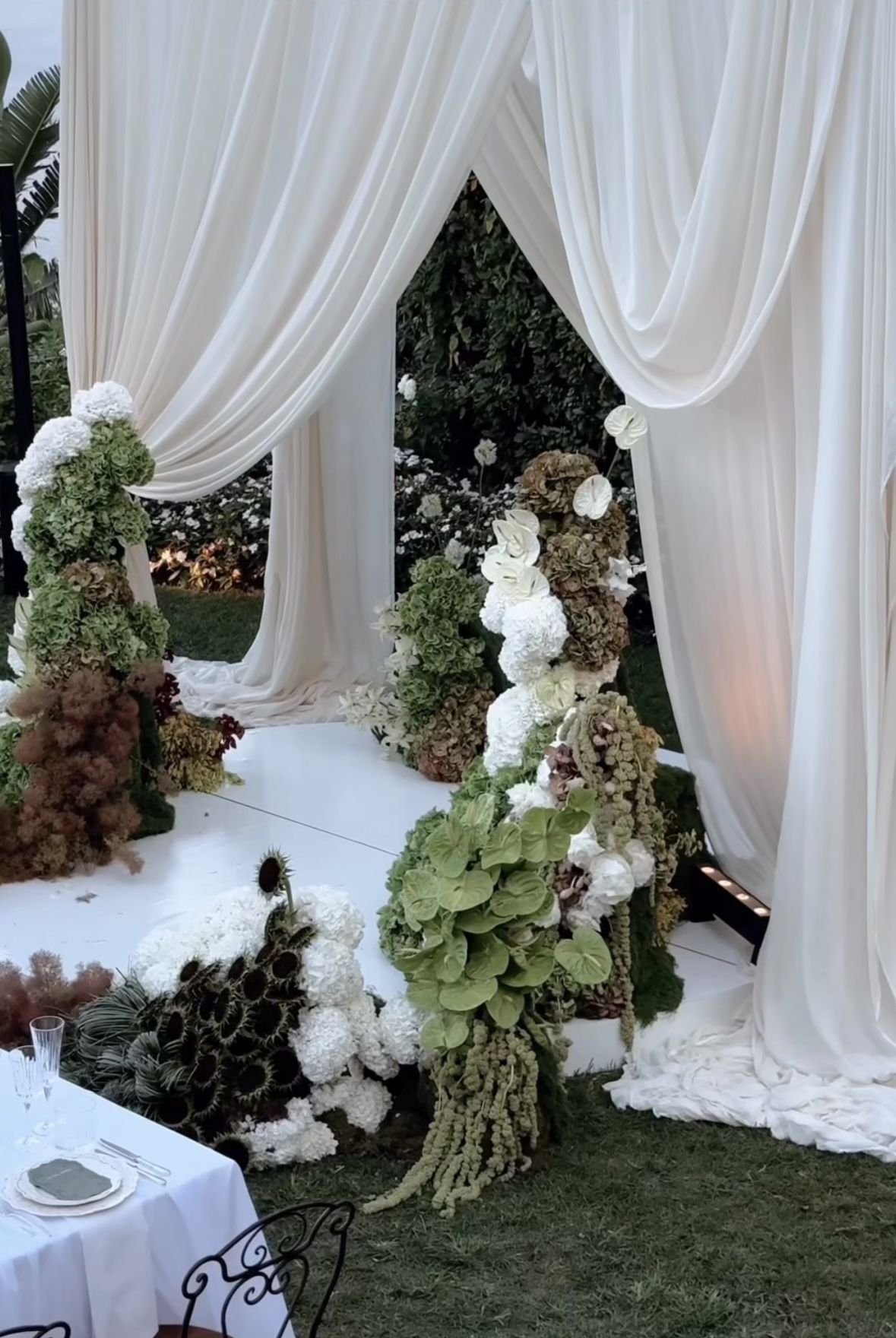
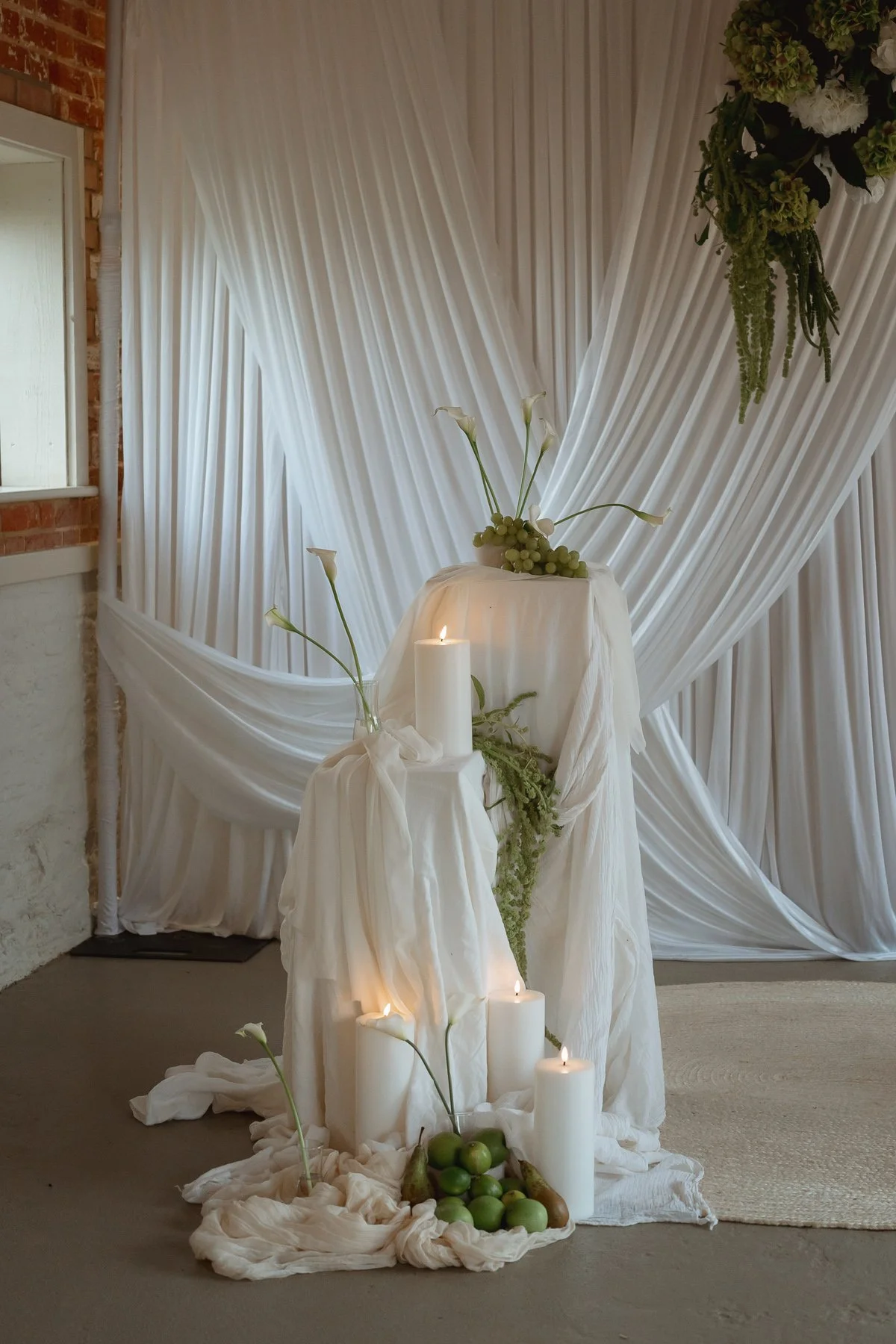
Ceremony Draping
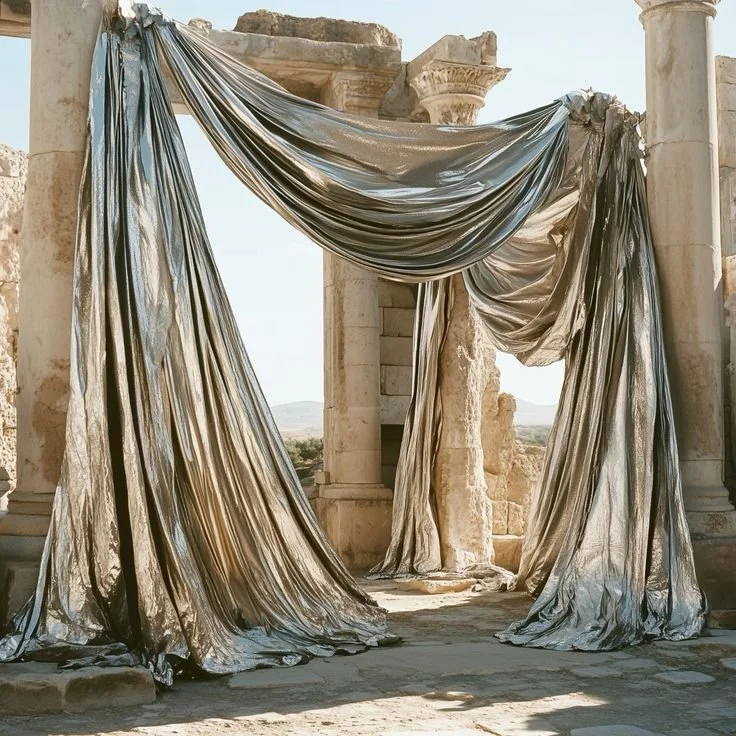
There are so many ways to bring draping into your ceremony without necessarily creating a traditional draping backdrop.
Draped plinths topped with florals can add softness and movement around your ceremony space, while fabric can also be incorporated into a ceremony platform or staging to soften the structure and make it feel like an intentional part of the design.
We can also drape arches and ceremony structures, including our Lucie Arch, allowing the fabric, florals and structure to work together rather than feeling like separate styling elements.
If you’re adding candles around draped plinths or other fabric installations, this does need a little extra planning. Fabric and open flames are obviously not besties, so the placement and type of candles need to be carefully considered when we’re developing the overall setup.
The result can be beautifully layered without feeling overdone. Draping brings the softness, florals bring the shape and colour, and the structure gives everything somewhere to live.
Entrance Draping
Creating an impact from the get-go? Yes please!
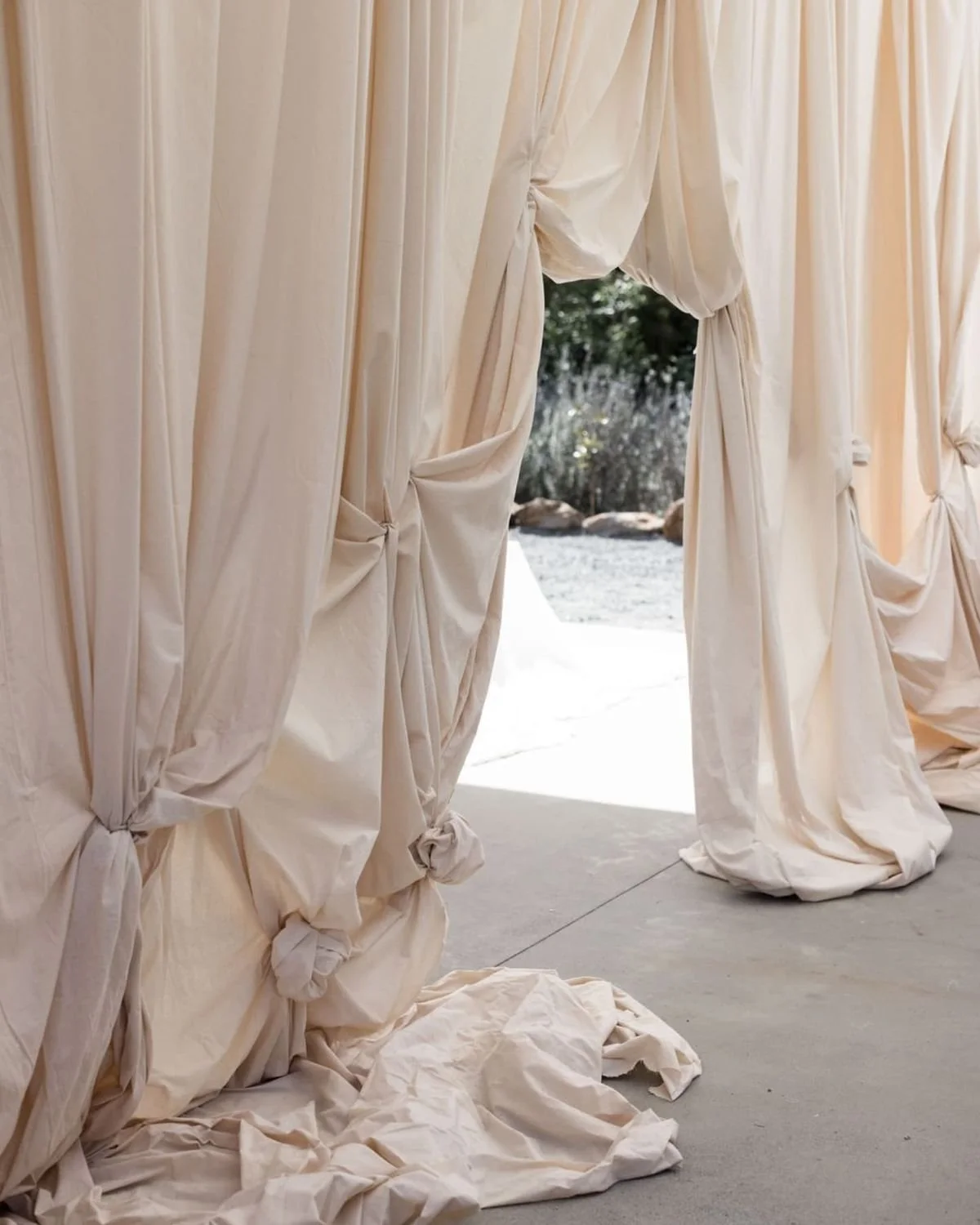
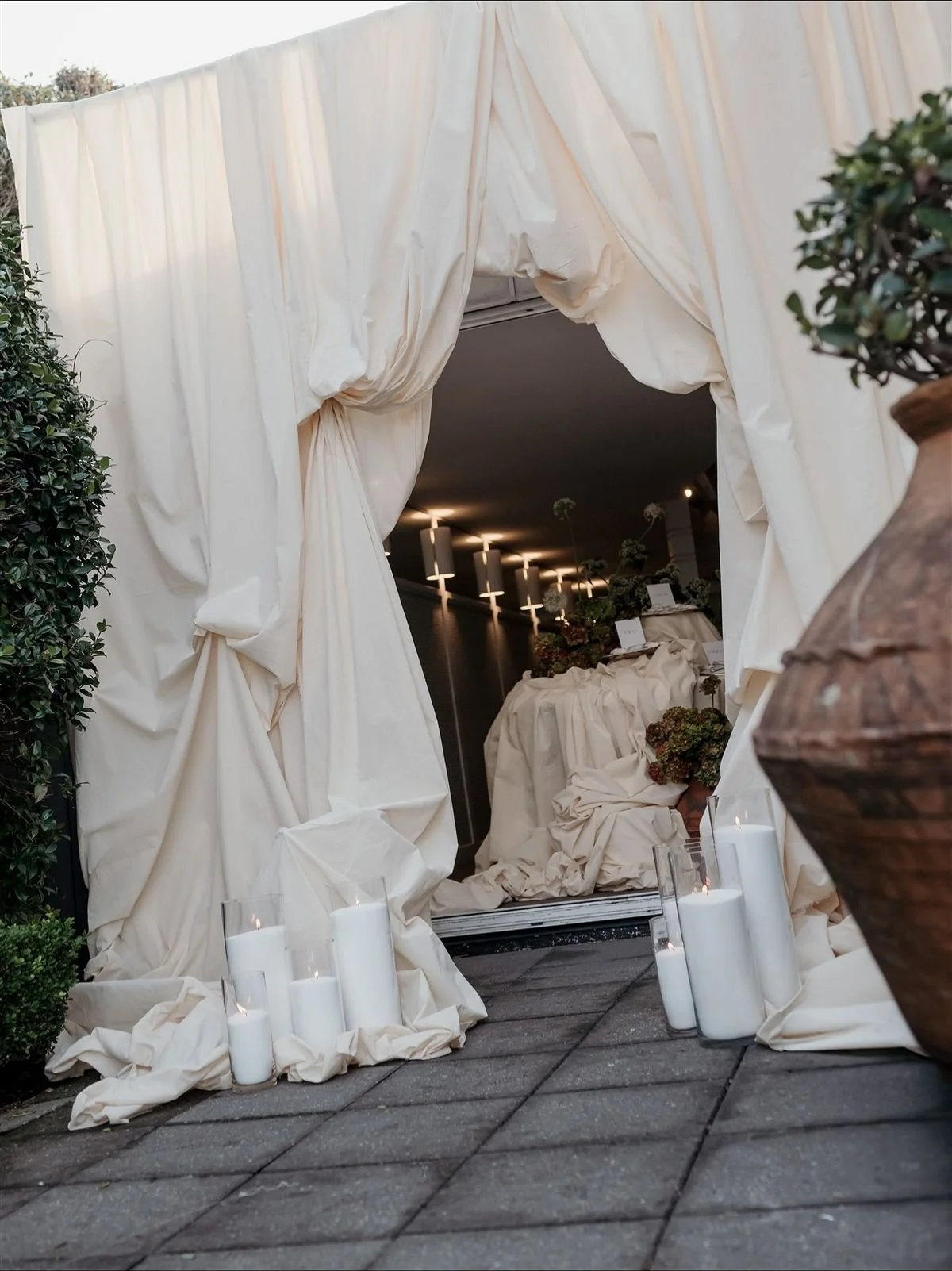
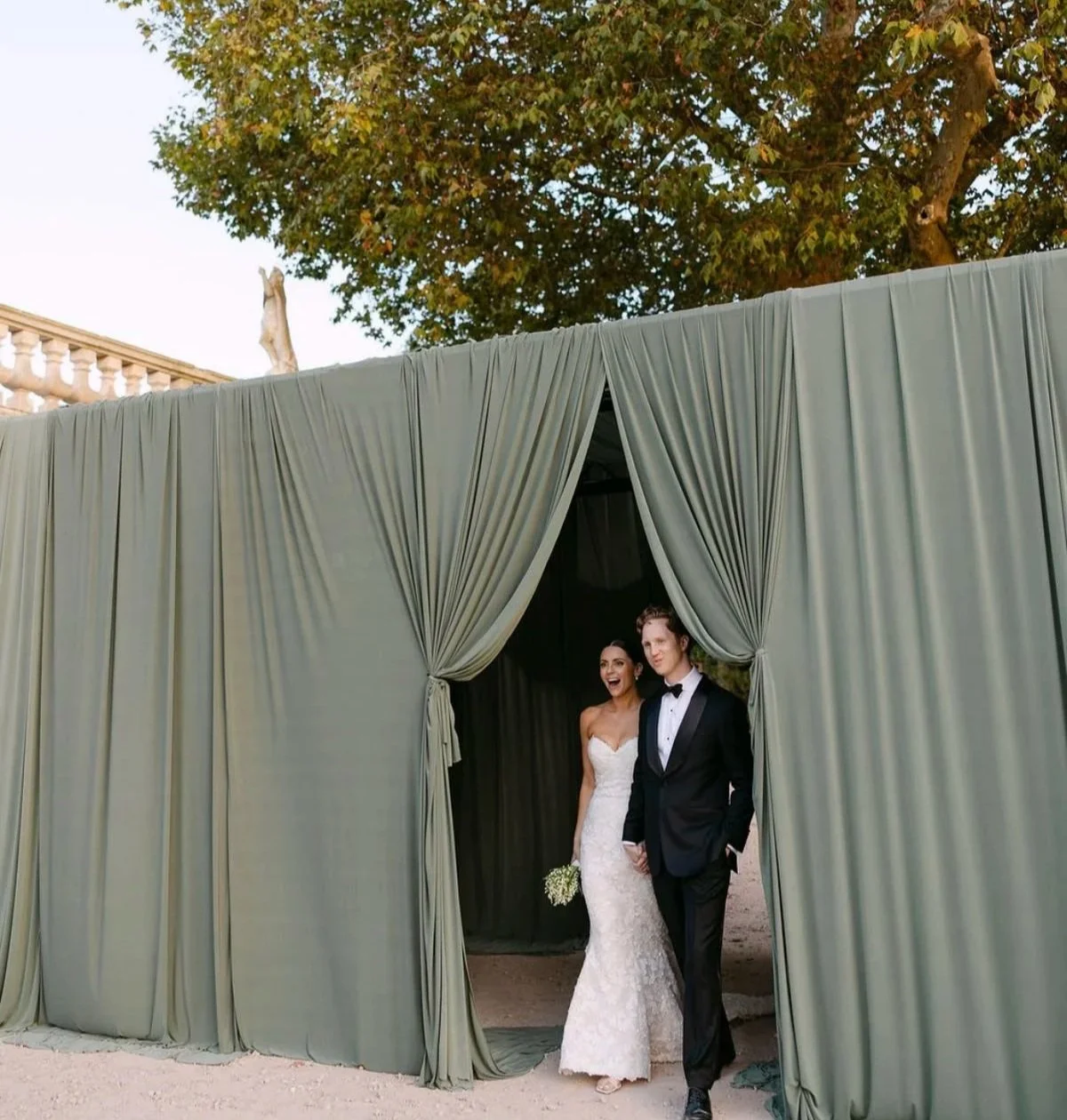
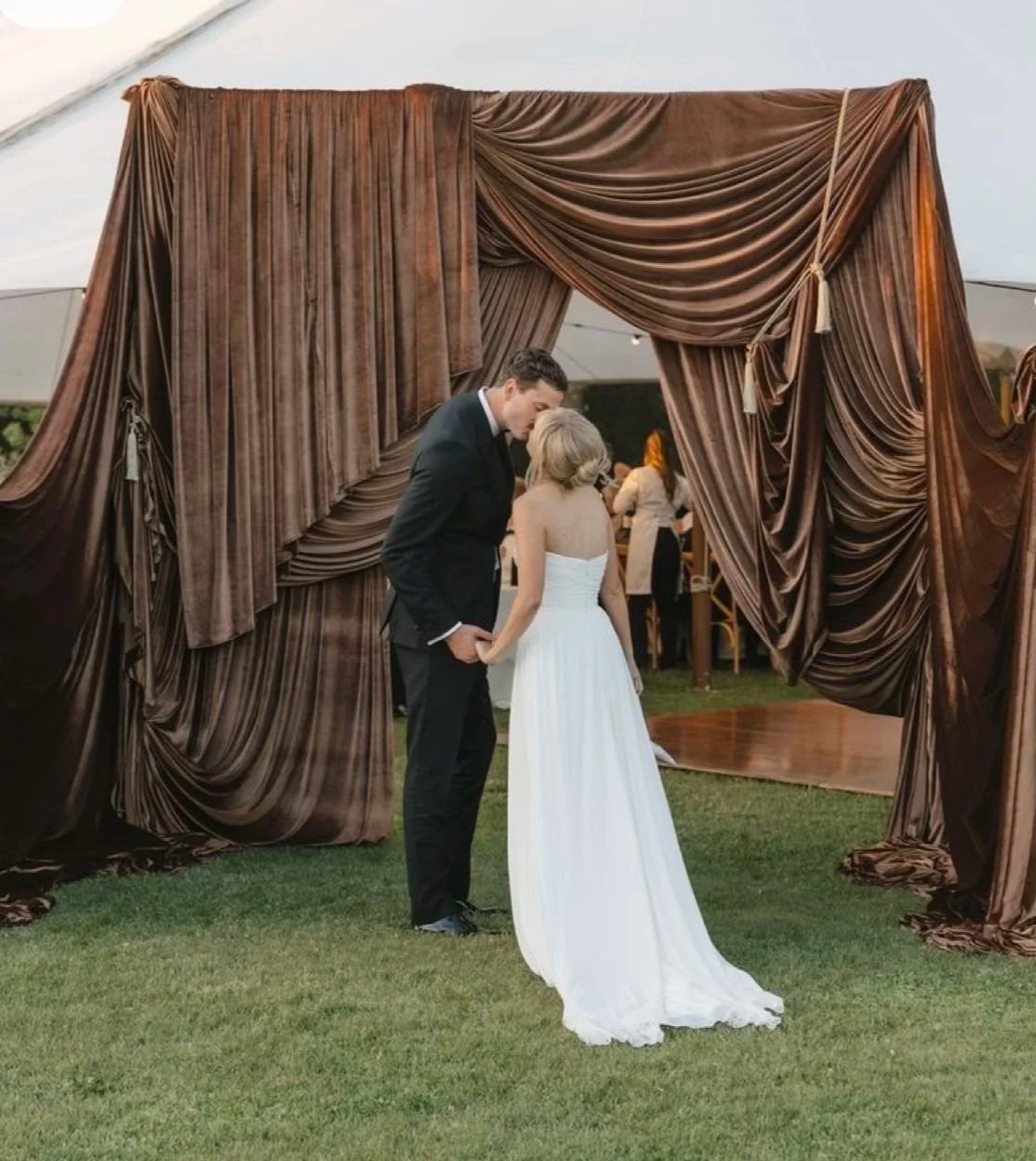
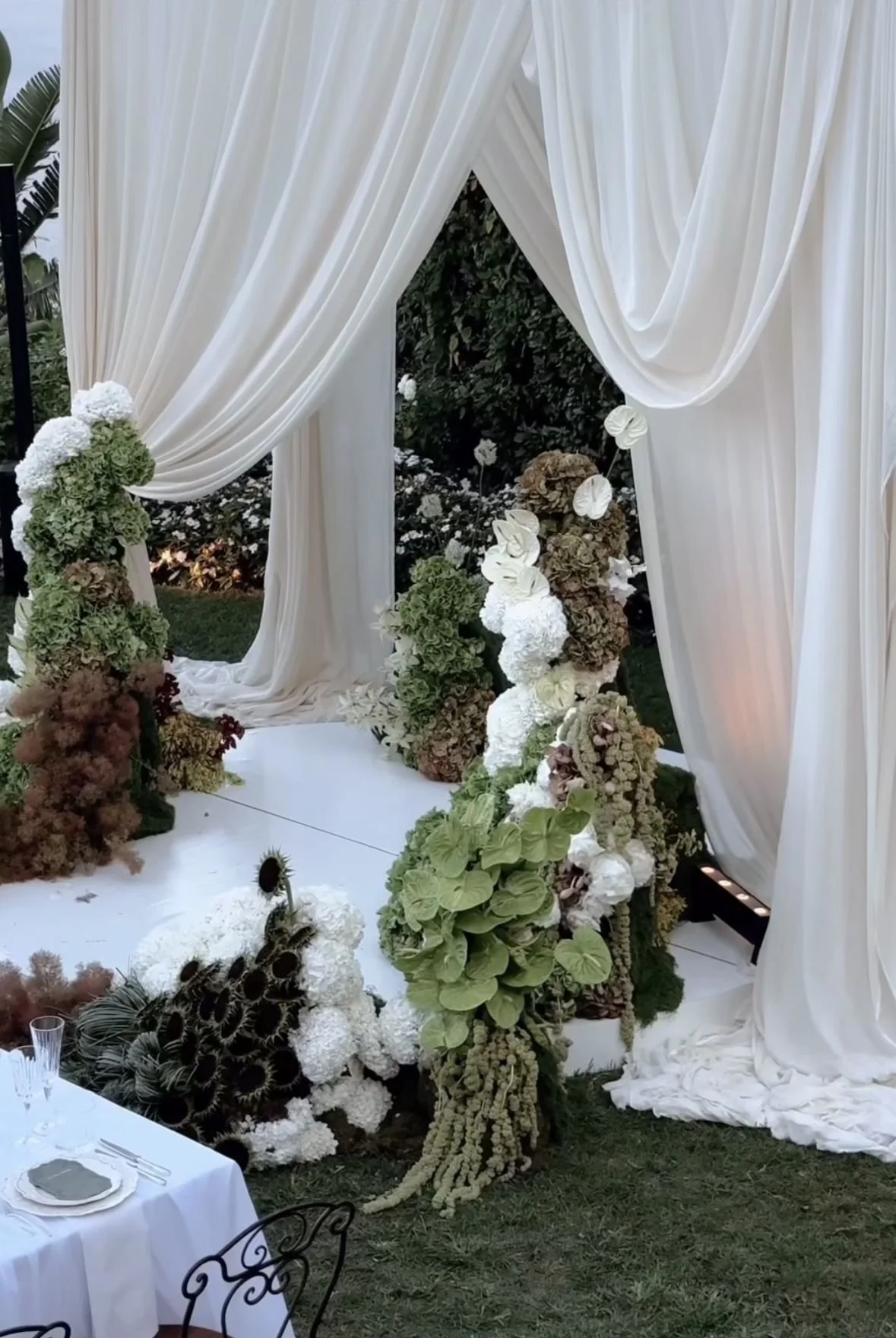
This is such an overlooked part of the day, but something that creates those “wow"s” as guests enter into the reception, or venue space. It sets the tone for the entire day, and in our opinion makes for a great alternative to a stand-alone backdrop.
Guests will stop, take photos and move on just as they would your usual backdrop but with the added wow-factor of being their own welcome to your wedding.
You can create this with the same mechanics as a traditional backdrop with a pipe and drapes kit and instead extend and drape the cross-bar, and sides. We’d also recommend popping plinths on either side with florals to finish the look.
Wedding Backdrop Draping
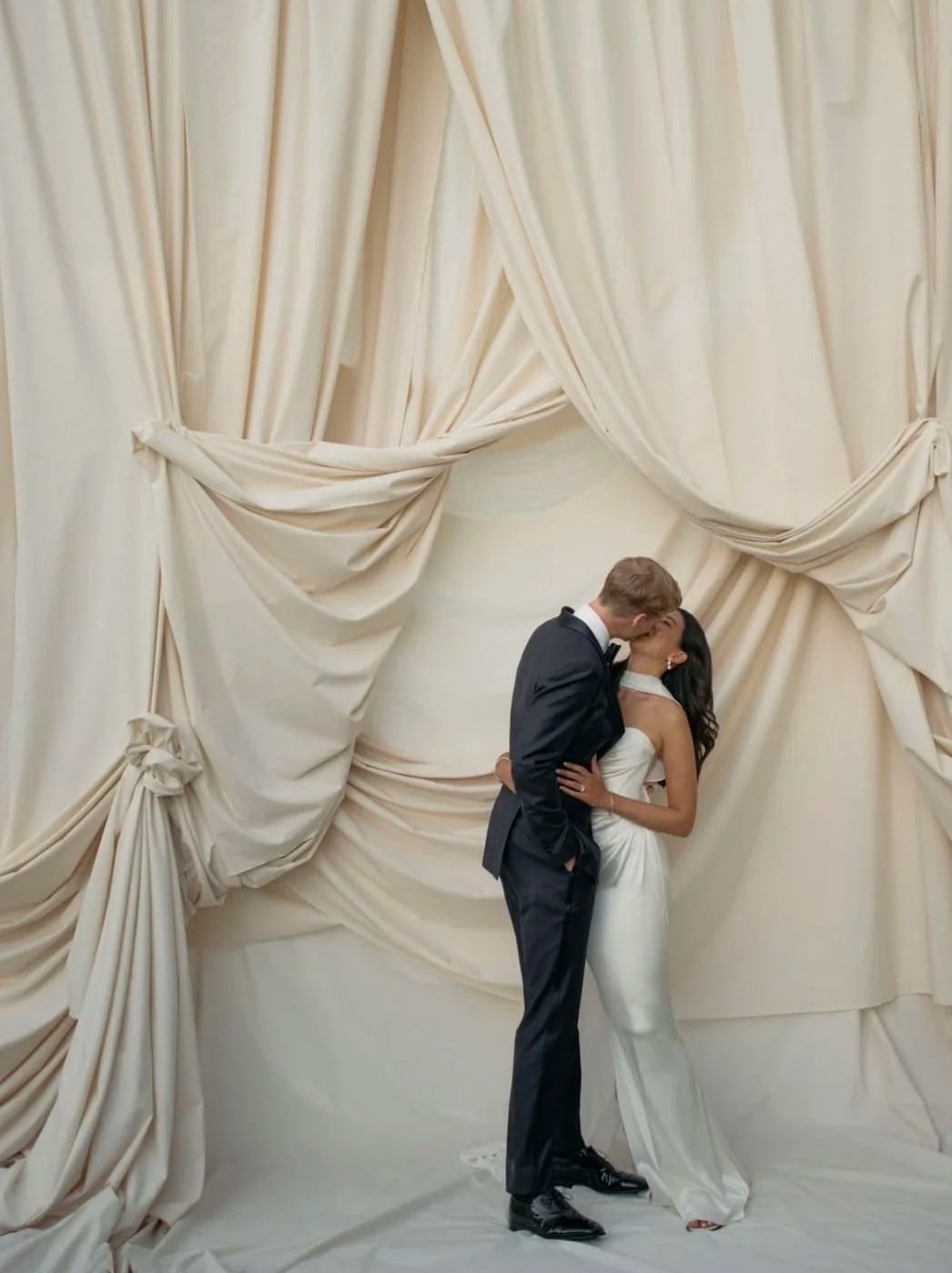
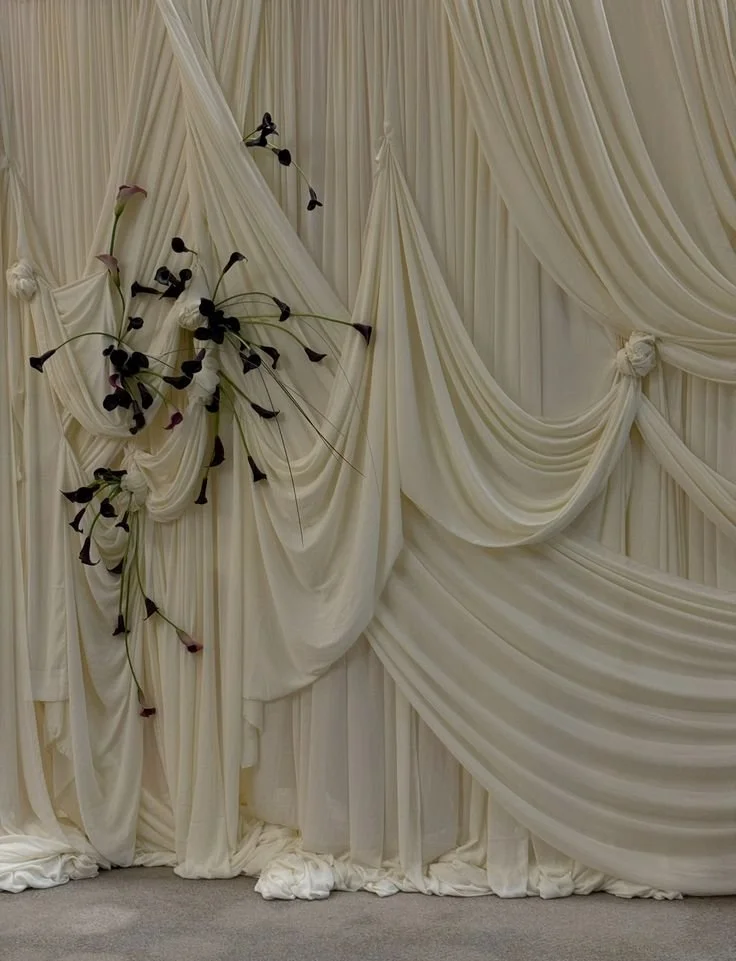
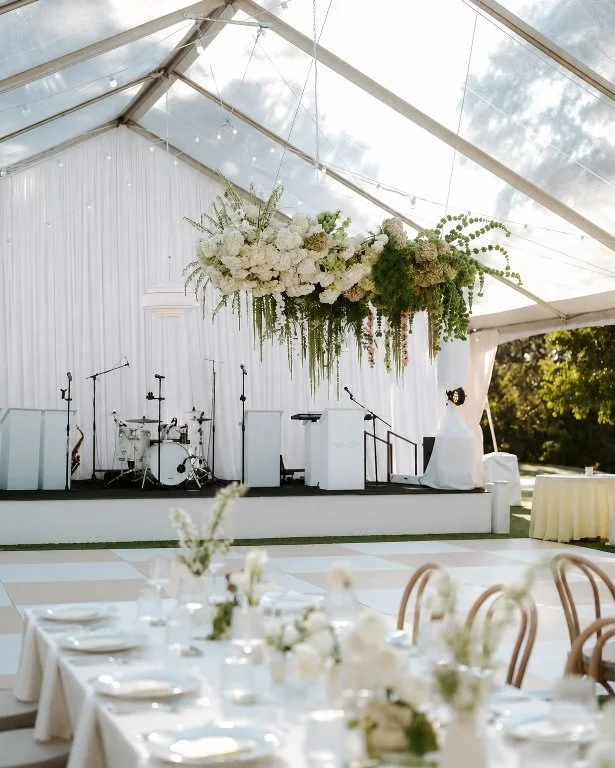
A draping backdrop is all about creating an intentional focal point and framing something you want people to notice.
This could be behind your head table or sweetheart table, cake table or bar, or as a dedicated backdrop for guest photos. Add florals, signage or other styling elements and suddenly that area becomes a proper statement moment rather than simply part of the room.
Backdrop draping can also soften an existing wall or give you a beautiful, considered background for photos throughout the day. It doesn’t need to be huge to make an impact. It just needs to be in the right place and work with everything happening around it.
Our draping backdrops are also available as dry hire, so you can collect the backdrop and fabric and install it yourself. If that’s your plan, keep reading because we’ve got some genuinely useful industry tips coming up.
Signage Draping
Just another beautiful way of leaning into the drapery trend. A different way to display your Welcome sign, or Seating Plan in a much more considered way.
Using draping on stands, or incorporating linen/fabric signage is a great nod to the overall drapery aesthetics to tie in with your other elements of your styling. This too could be incorporated into you entrance of your venue, or marquee also.
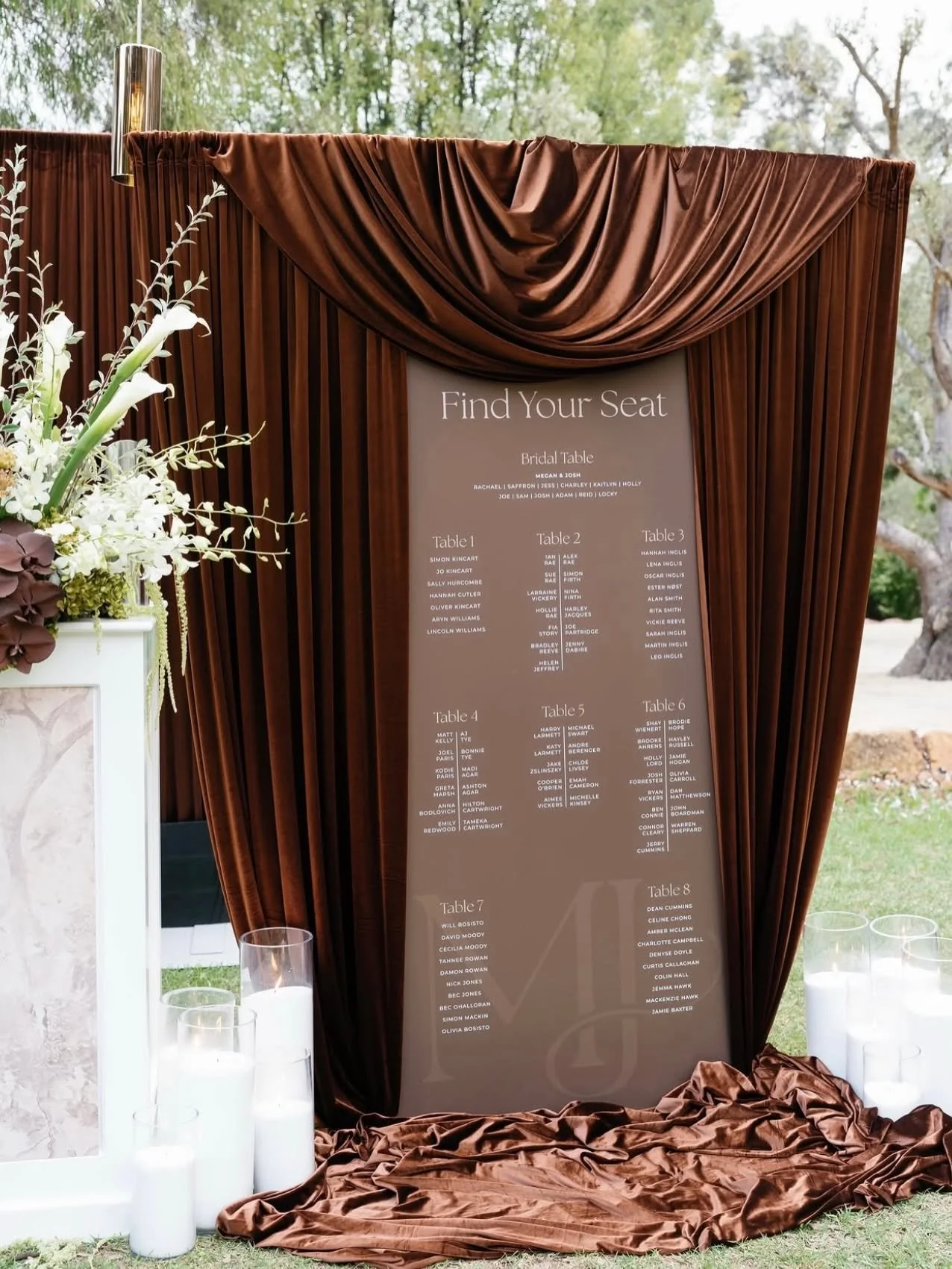
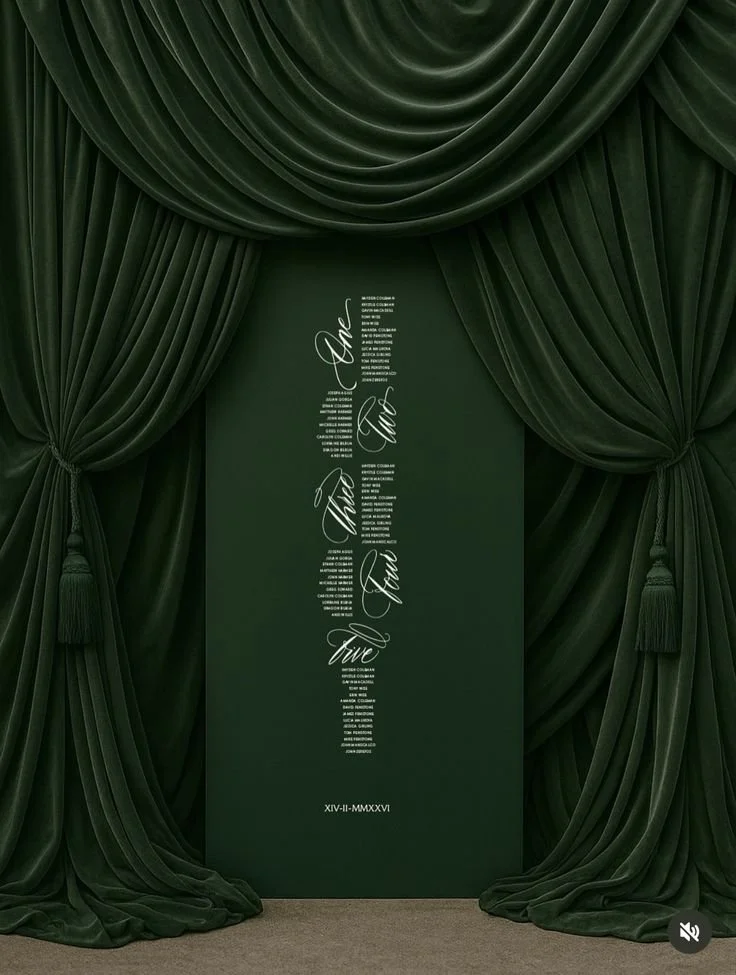
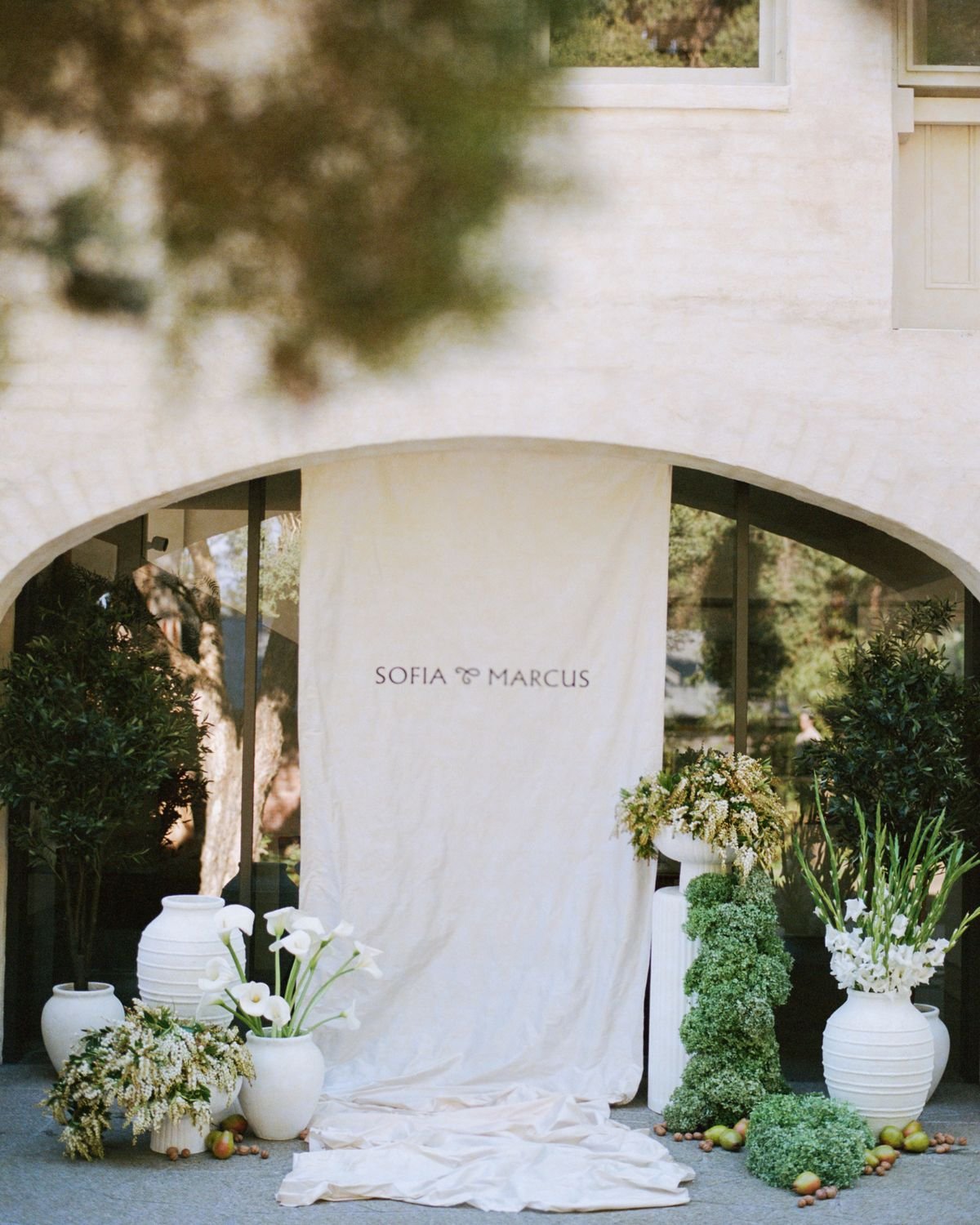
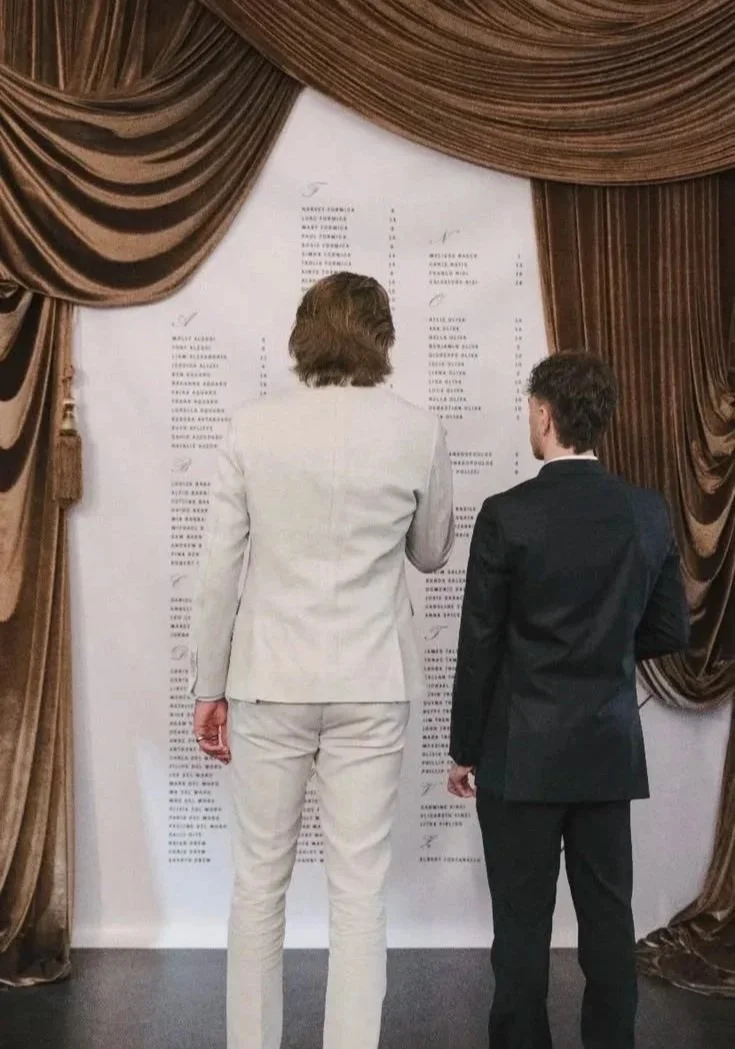
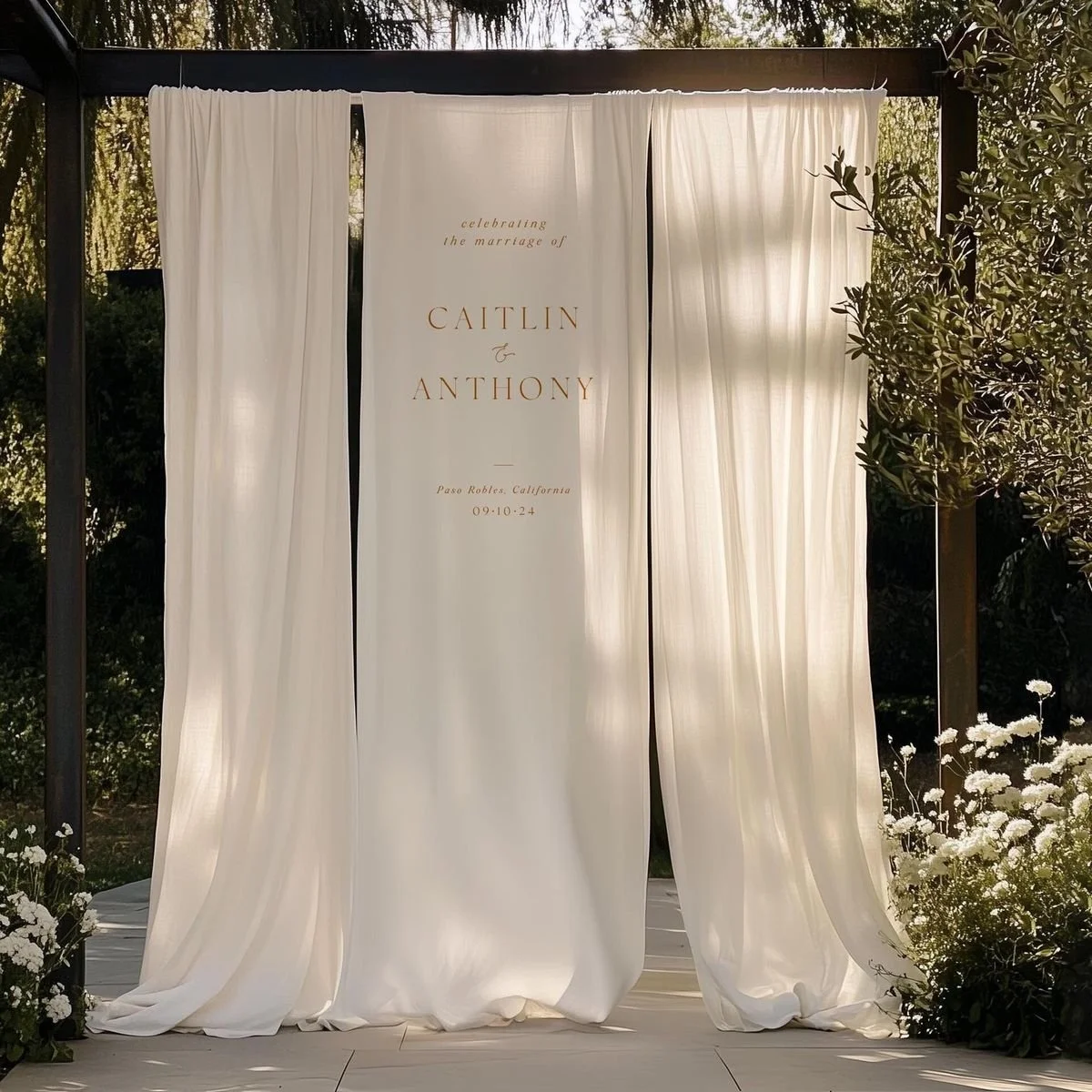
Table Draping
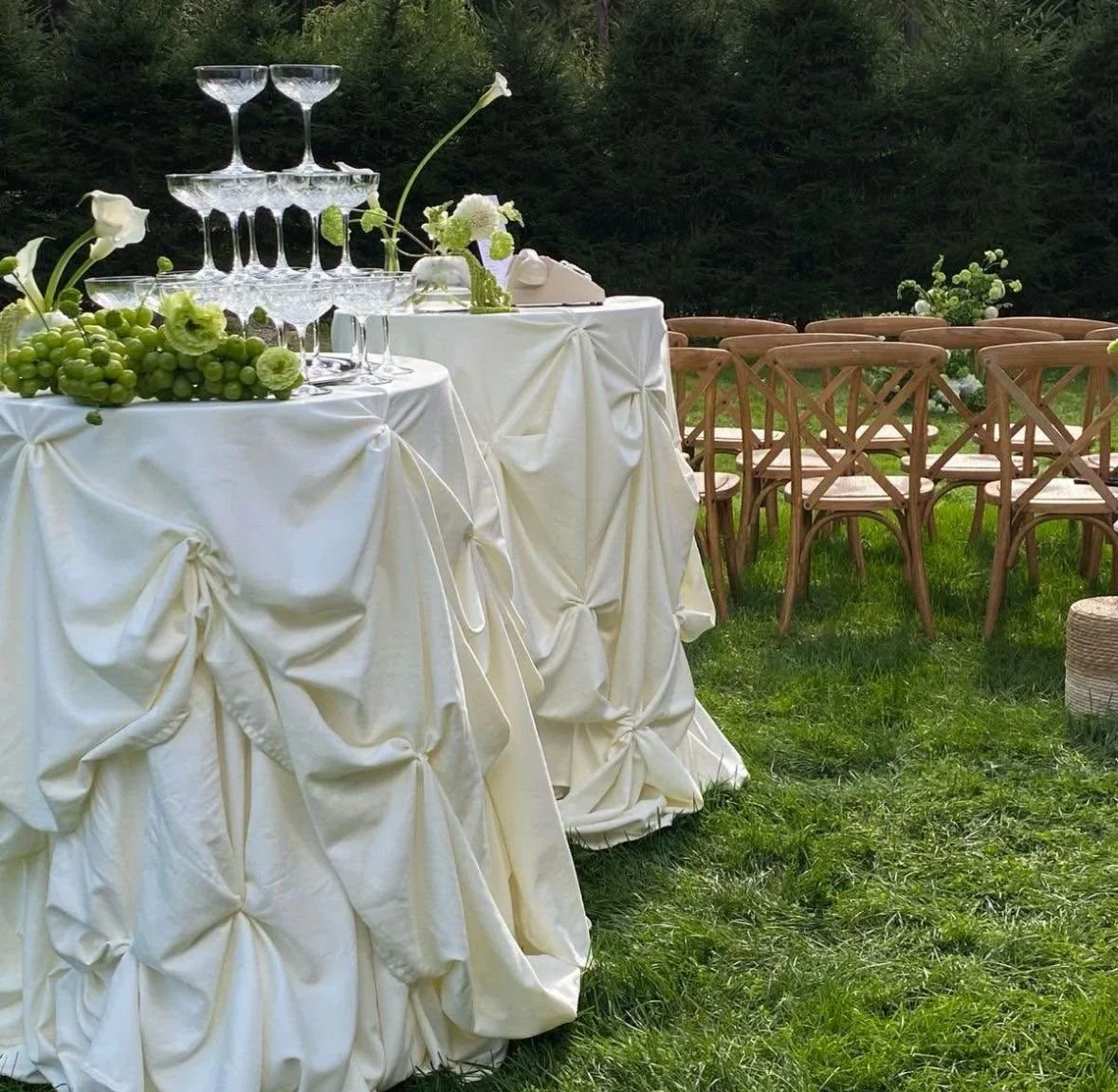
Draping can also turn a table into a proper styling moment.
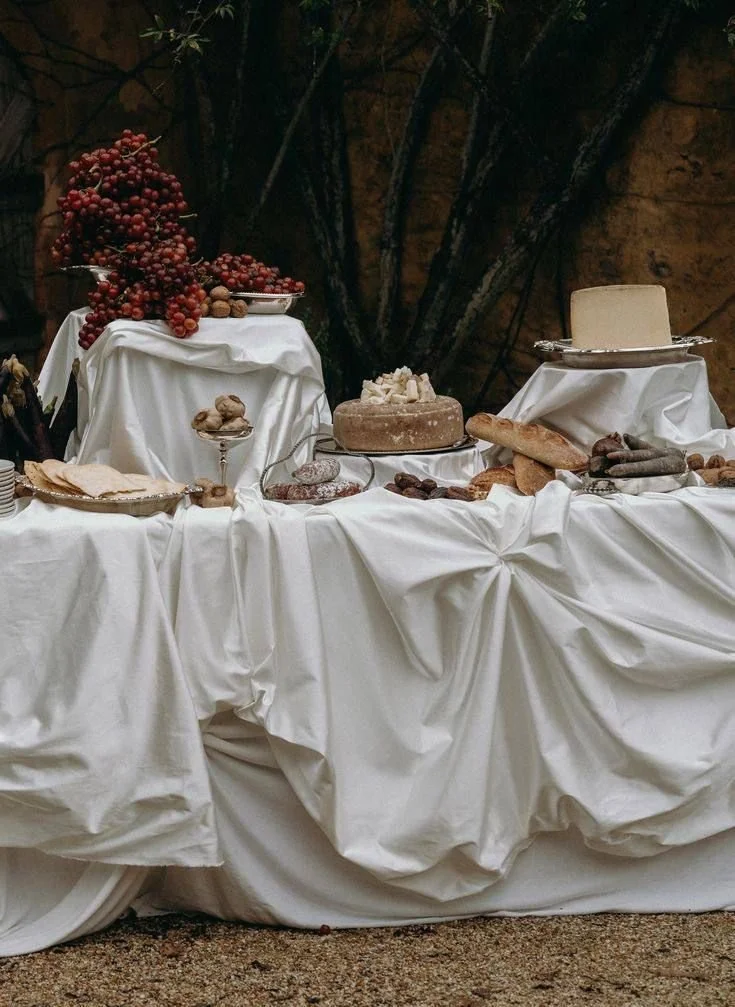
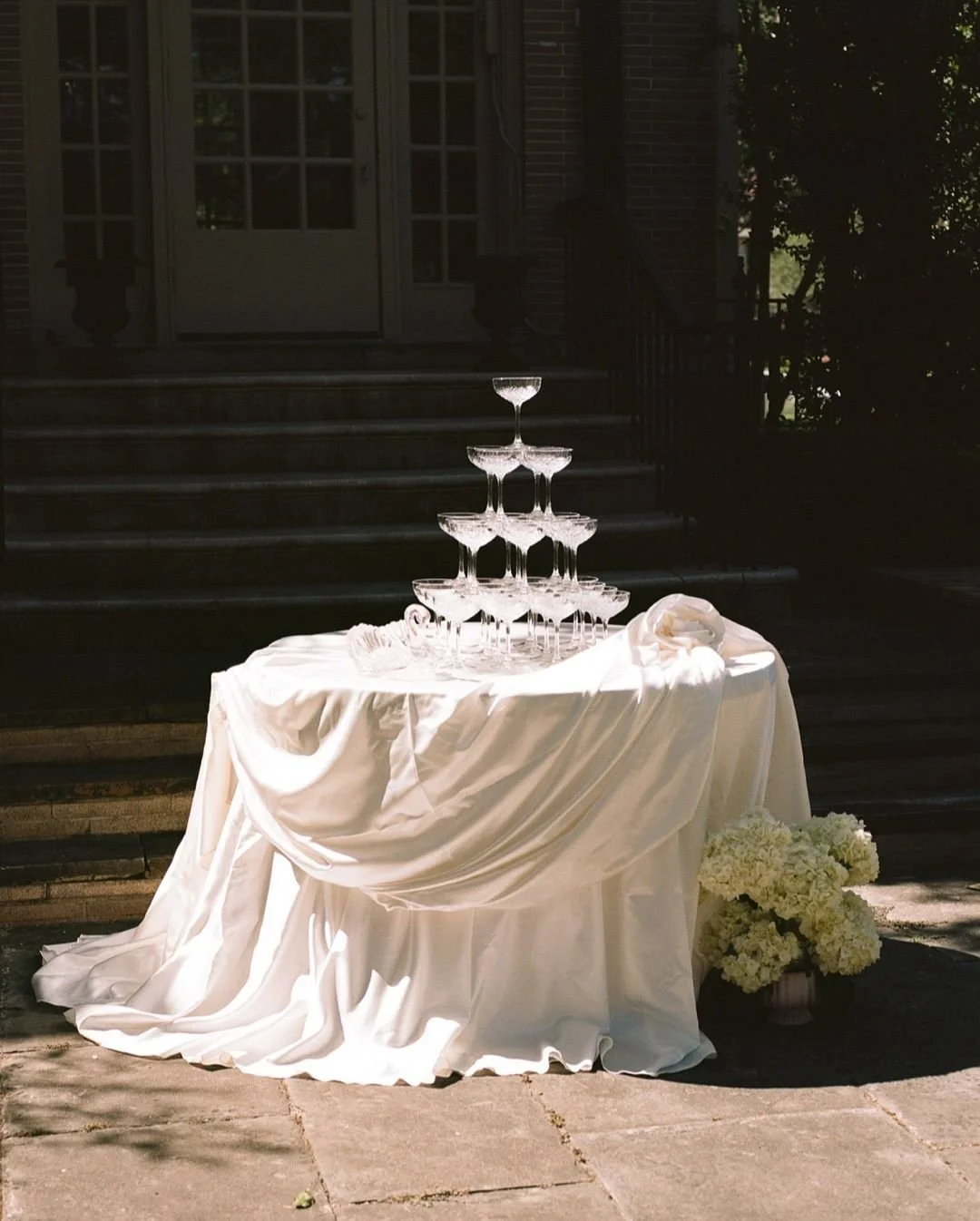
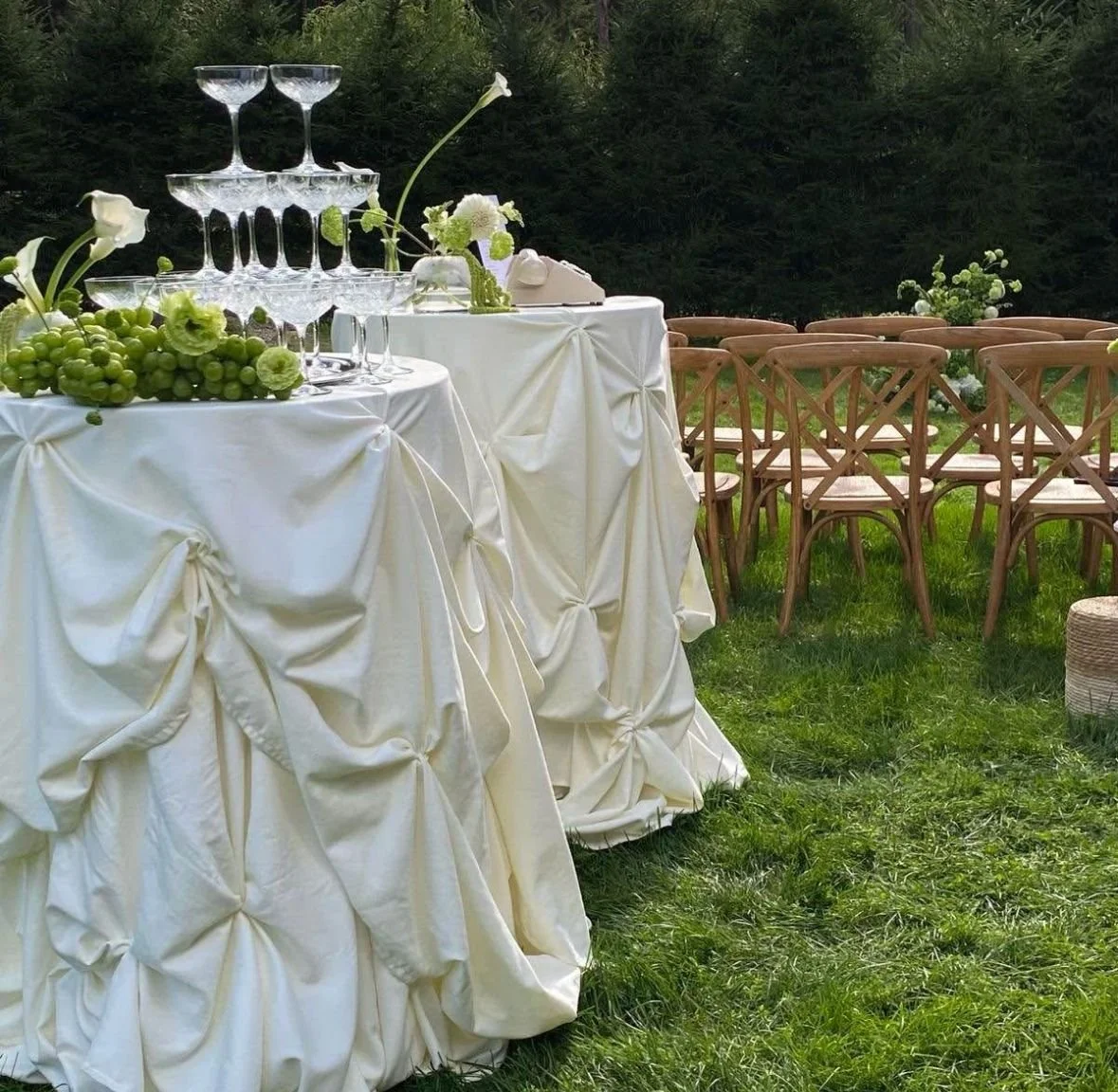
Your head table, cake table, champagne table or another feature table can be draped to introduce texture and create a softer, more considered finish than a standard table setup.
We particularly love this when there’s already draping elsewhere in the wedding. You might have fabric incorporated into your ceremony, then repeat that detail at your head table once guests move into the reception. It creates a visual connection between the different parts of the day without everything needing to match perfectly.
And if your cake is going to have its own moment, give it an actual moment. A beautifully draped cake table can make it feel like part of the styling rather than a very expensive cake that has been popped onto the nearest available table.
It’s these smaller details that help everything feel cohesive. Your guests probably won’t walk around identifying every repeated fabric choice, but they will notice when the whole wedding feels considered, connected and very you.
And that’s always the goal.
Marquee Draping
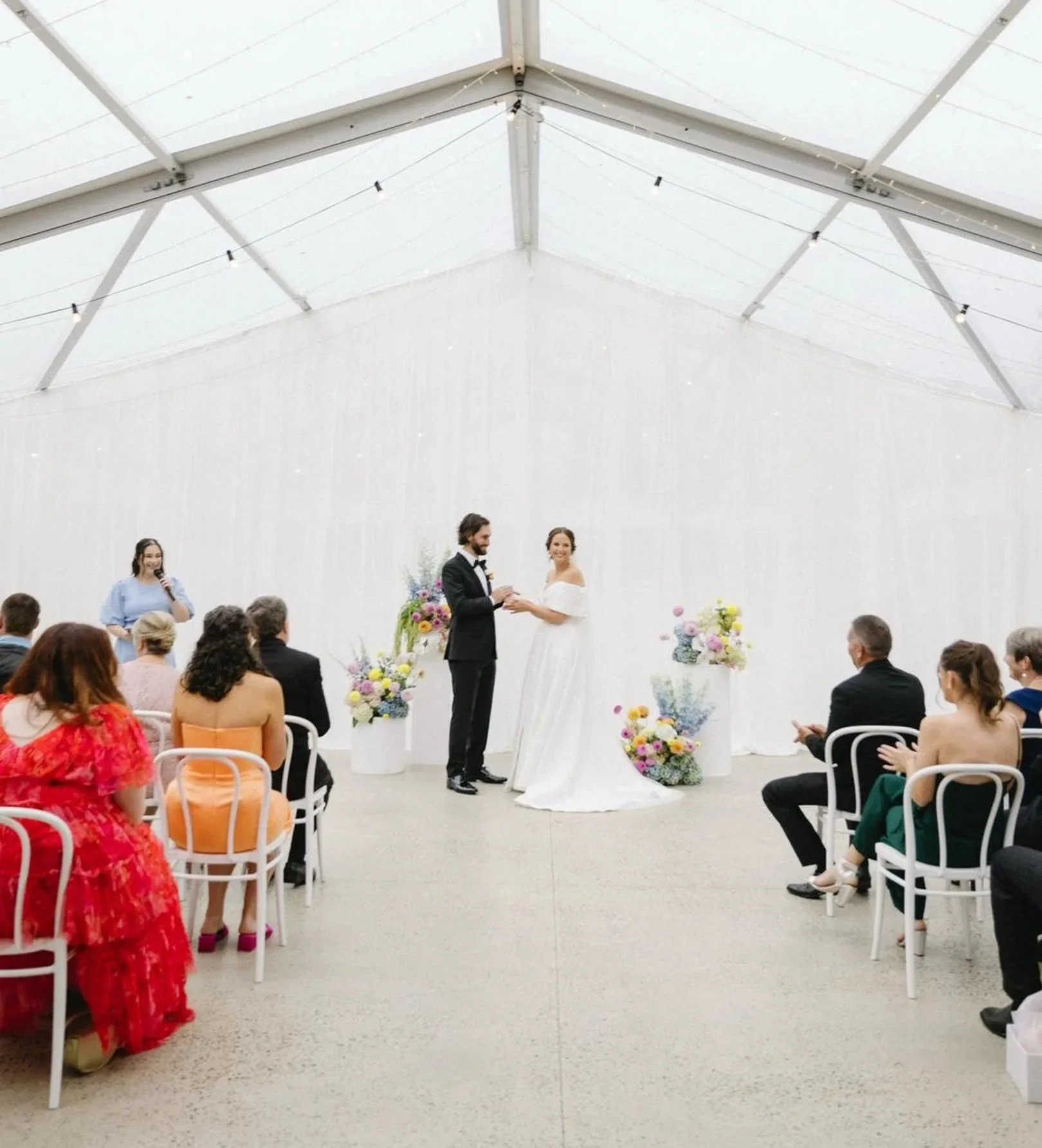
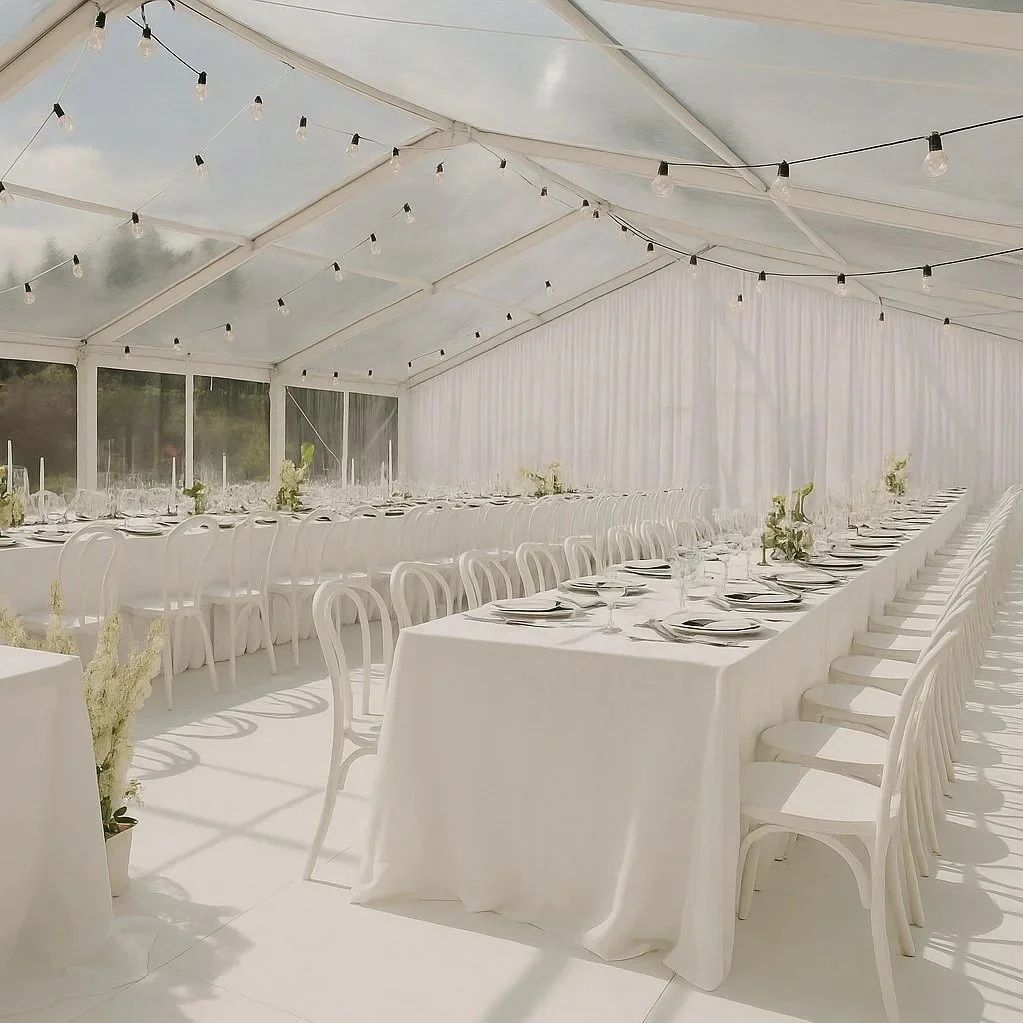
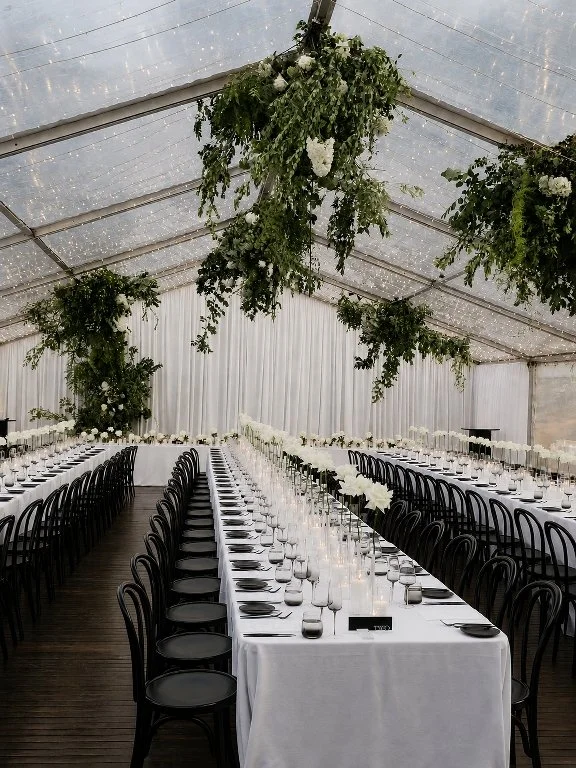
Draping is one of the most transformative things you can do inside a marquee. It can soften the structure, add texture, create a focal point and help a functional marquee feel like a space that has been properly designed from the inside out.
And there’s definitely more than one way to do it.
Apex Draping: Draping installed from the apex of the marquee to create a feature at either end, or used within the marquee to help divide the space and create different zones.
Wall Draping: Fabric installed along the walls to soften the structure and create a more considered backdrop for everything happening inside.
Ceiling Draping: Draping installed overhead to add softness, movement and texture, particularly beautiful when layered with your lighting.
Custom Marquee Draping: For something a little more luxe, custom colours can be incorporated through the apex, ceiling or walls to tie the draping into your wider colour palette and creative direction.
Marquee draping can be as considered or as statement-making as the space calls for. Sometimes one draped apex is enough to completely change the feeling, while other designs call for fabric throughout the ceiling and walls.
We’ve got a whole separate guide dedicated to marquee draping, including how to choose where to use it, colour, lighting, guest flow and how it works with the rest of your styling. So if a beautifully draped marquee is currently taking over your Pinterest board, head there next for the full rundown.
What draping fabrics do we offer?
This is another area where the internet can send you down a serious rabbit hole. There are loads of fabrics used for event draping, but we offer three core options: Non-crease polyester blend, Ice Silk and Velvet.
Each has its own look and feel, and which one we recommend will depend on what you’re trying to create.
Non-Crease Polyester
Our non-crease polyester blend is a really versatile option that creates a clean, polished finish. It works beautifully for backdrop draping and larger installations where you want a consistent finish. This fabric can be used for backdrops and dividers. When used as a divider, it will allow some light through, so if you’re wanting a more opaque option we recommend Velvet.
And yes, the non-crease part is every bit as useful as it sounds. Wrinkles are not the vibe.
Ice Silk
Ice Silk gives us a softer, more fluid look. It has beautiful movement and works well when you want the draping itself to become more of a styling feature. This fabric is also non-creasing, and it’s the lesser opaque of all the fabrics so we recommend using it for backdrops only, as opposed to dividers.
This is where the way the fabric falls becomes really important. The same draping backdrop can look completely different depending on the fabric, how much is used and how it has been styled.
Velvet
Want something richer? Hello, Velvet.
Velvet adds texture, depth and a little more drama to a space. It’s beautiful when you want your backdrop or draping to have more visual weight and become a feature within the wider wedding design.
But we’re not automatically reaching for Velvet because you’ve decided you want something luxe. We’re looking at your colour palette, furniture, florals, signage and the venue itself first.
This is our most opaque fabric and works perfectly for all draping options including dividing a space.
Everything needs to belong at the same party.
How do you know which wedding draping you need?
Before you start choosing fabrics, ask yourself one question:
What do I actually want the draping to do?
Maybe you want to soften the space or make a large venue feel smaller. Perhaps you need to divide a marquee, cover something you’d rather not see, add texture or create a beautiful focal point behind your ceremony.
Once we know the problem we’re solving or the feeling we’re trying to create, it becomes much easier to work out what type of draping makes sense.
This is why we recommend thinking about wedding draping as part of your overall styling rather than choosing it completely separately.
Start with the venue
We need to know what we’re working with. Every venue is different, and the height, structure, dimensions, access and existing features of the space all affect what will work.
The same draping concept won’t necessarily have the same impact in every venue.
Your styling should work with your venue and your wedding rather than trying to recreate someone else’s Pinterest photo piece for piece.
Decide where you want the impact
Not every wall needs draping and not every part of the marquee needs to become a feature.
Instead, think about where your guests will naturally look. What do they see when they arrive? Where is your ceremony? Where will you be sitting? Where are speeches happening? What will be behind you in your photos? Where is the dance floor?
Sometimes one really considered draping installation will have far more impact than spreading your budget across five different areas.
This is where having a clear creative direction makes a huge difference.
Think about guest flow
This one isn’t as exciting as choosing fabric, but it matters.
If we’re using draping to divide a venue or marquee, we need to think about how people are actually going to move around it. You don’t want a gorgeous divider that accidentally creates a traffic jam between 100 guests and the bar.
We consider where your natural walkways are, how guests will move between different zones, whether important areas are easily accessible and whether the dance floor still feels connected to the rest of the wedding.
Good styling considers all of this.
We’re not just designing what guests see. We’re designing how they experience the space.
Don’t forget about lighting
Draping and lighting are very good friends.
Fabric can look completely different depending on the light around it, so it’s worth considering how your space will change throughout the day.
This is particularly important with a clear marquee. What looks one way in beautiful afternoon sunlight can feel completely different once the sun goes down and your evening lighting takes over.
We want the draping, lighting and styling working together rather than everyone off doing their own thing.
Can you DIY a wedding draping backdrop?
Yes. We offer our backdrop draping as a dry hire option, which means you can collect the backdrop and fabric from us and install it yourself.
If you’re confident with setup, have some capable helpers and don’t mind spending a little time getting the fabric just right, DIY can absolutely be an option.
But before you nominate your most practical bridesmaid and send her in armed with some inspo images, there are a few things you REALLY need to know and consider.
DIY rule number one: put the pins down
Seriously.
No pins, safety pins or anything else that creates a hole should ever be poked through hired draping fabric. Not even a tiny one.
Pins damage the fabric, cause thread pulls and leave permanent damage.
If hired fabric is damaged, you are liable for the full replacement cost. And it’s not cheap, friends.
When you’re working with multiple lengths of fabric, that can turn one seemingly innocent DIY hack into a rather expensive one.
So, what do we use instead?
Rubber bands and bull clips.
Yep. Nothing particularly glamorous here, they work, and they work exceptionally well.
Use the loops already in the fabric
Our draping fabric has a loop designed to be threaded directly onto the crossbar. Rather than trying to pin or attach the fabric to the bar yourself, the crossbar is threaded through the loop and the fabric can then be slid along it into position.
Simple enough.
Where things start getting slightly more technical is when you’re working with multiple pieces of fabric. Those pieces need to meet, overlap and fall correctly without leaving awkward gaps or making it painfully obvious where one piece finishes and the next begins.
Multiple pieces can be secured using bull clips, or another option is to use a second crossbar.
If you’re dry hiring your draping backdrop and need another crossbar, make sure you organise this with your hire company beforehand. Additional crossbars need to be hired separately.
Nothing like discovering you needed another piece of equipment when you’re halfway through setup.
Rubber bands are your friend
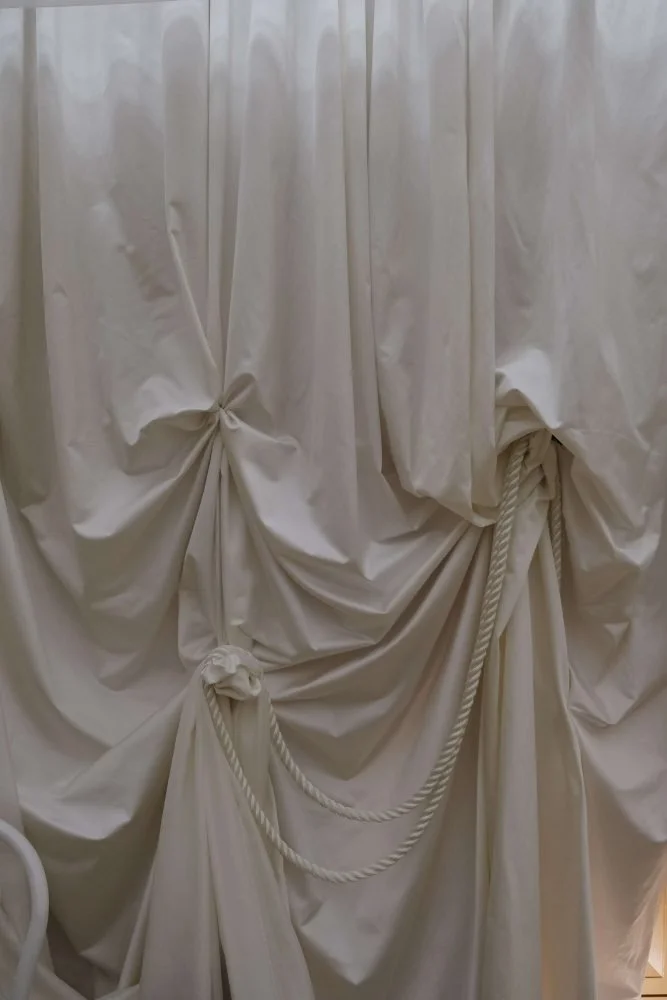
You know those beautiful little ruching and gathered sections you see in professionally styled draping? Rubber bands are one of the tricks we use to create them.
The fabric can be carefully gathered and secured with a rubber band at the back to create those wee ruching without putting holes through it. It’s so incredibly simple, and something we love sharing with industry friends.
Gather, secure and adjust until you get the finish you’re after.
Bull clips do a LOT of heavy lifting
The humble bull clip might not be winning any wedding styling awards, but she’s useful.
We use bull clips to secure fabric in the right spots, particularly when we’re working with multiple pieces or need the fabric to stay exactly where we’ve styled it. They can help secure layers and give you more control over where everything sits, all without putting holes through the fabric.
Again, the trick is making sure they’re doing their job without being seen.
Look after your poles and crossbars
This one is important.
Our backdrop poles and crossbars are aluminium, which makes them lightweight and easy to handle, but it also means they need to be transported with care.
Please don’t throw them into the back of the car, ute or trailer underneath a pile of other hire items and hope for the best.
If an aluminium pole is banged, crushed or dented, the pieces may no longer connect together properly. If they can’t connect, we can’t use them, which means damaged poles may need to be fully replaced at the hirer’s cost.
Our tip is to transport the poles somewhere they can lie safely and stay protected from other items moving around them. Keep them secure, don’t stack anything heavy on top and take a little extra care when loading and unloading.
Not the sexiest part of wedding styling, we know. But very much the difference between “Cute, the backdrop is going up” and “Why does this pole suddenly not fit?”
A little care goes a very long way.
More fabric usually means more styling
One of the biggest DIY misconceptions is assuming the frame determines how the backdrop will look.
It doesn’t. The frame gives you the structure, but the styling of the fabric creates the finished look.
How much fabric is gathered into one area, where it overlaps, how evenly it falls, where you create ruching and how much fabric sits across the width can completely change the final result.
Our tip is not to stretch your fabric out simply because you have space to fill. If you’re trying to make too little fabric cover too much space, you’ll lose the beautiful fullness that makes draping look intentional and styled.
Sometimes narrowing the backdrop slightly and keeping the fabric full will give you a much better result than stretching everything within an inch of its life.
Step back. A lot.
This is one of the easiest professional styling tricks to steal.
Rather than standing 30cm away from your backdrop adjusting the same fold for ten minutes, make an adjustment and then step back.
Look at the entire installation. Is one side heavier than the other? Is your centre actually centred? Does one section have beautiful fullness while another suddenly looks flat? Are your fabric joins obvious?
Then go back in and adjust.
We spend a lot of time stepping backwards during installations because the backdrop needs to look right from where your guests and photographer will actually see it, not from six inches away while you’re holding a bull clip between your teeth.
Set it up before the wedding day
If you’re dry hiring and DIY installing your backdrop, please don’t make your wedding morning the first time you’ve ever assembled it.
Do it the day before. This means you’ve got the time to work out how the frame goes together, how the fabric threads onto the crossbar, where your different pieces need to sit and how long it actually takes you to get the finish you’re happy with.
Having a photo to refer back to as inspiration is also really important, but it’s just as important as understanding that your insp photos will likely be using very different fabric choices, lengths and pieces that you may not have. So use it as inspiration, but go with the flow here rather than trying to perfect the exact style in your images.
Why we recommend professional draping installation
Have we just given you some of our draping tricks? Absolutely.
Do we still recommend having us install it if you want a really polished finish? Also absolutely.
Knowing that we use a rubber band to create a ruche is one thing. Knowing where to create it, how much fabric to gather, how to layer multiple pieces, where to secure them, how to hide all the mechanics and when to stop fiddling is the part that comes from experience.
Then there’s the actual venue to consider. The floor might not be level, the backdrop might need repositioning once the furniture arrives, your florals could change the visual balance or the fabric might need more gathering than you expected. Something that looked perfectly centred on a floor plan can suddenly look completely off once everything else is installed around it.
And if it’s going outside - there are so many more factors to consider including the weather, a gentle breeze (no wind please!), or the positioning it so the sun isn’t in anyone’s eyes. More mechanics, the need for sandbags, and installation has to happen on the day, and it needs to be packed down that night as it can’t be left outside overnight.
This is why a lot of the final styling happens on site.
When we install your draping backdrop, we’re not simply assembling a frame, hanging some fabric and heading home. We’re looking at how everything sits within the wider space and making those tiny adjustments until it looks right. It takes particular stylists on a team to get this right.
And those tiny adjustments are usually the difference between “Yep, we hired some draping” and “Okay, WHERE did you get that backdrop?”
Dry hire or professional installation?
Both options have their place.
Dry hire could be right for you if you’re confident installing it yourself, have capable people helping and are happy to take responsibility for both the equipment and how the final draping looks.
We’d recommend professional installation if the backdrop is a key feature of your wedding, you want a really polished finish or you simply don’t want another setup job on your list.
And that last one matters.
Your wedding morning should feel like your wedding morning, not an episode of The Block.
How draping fits into your overall wedding styling
This is probably the most important part, because we don’t look at draping in isolation. We’re looking at the whole wedding and how every element works together, including your venue or marquee, furniture, florals, signage, lighting, guest numbers, layout and colour palette.
Most importantly, we’re thinking about how you want the space to feel.
Cohesion doesn’t mean making everything match. It means making sure every element feels like it belongs. Your florals should make sense against your backdrop, your furniture should suit the scale and style of the marquee, your draping should work with the architecture of the space, and your layout should make sense for the number of guests actually using it.
When all of those decisions are considered together, the result feels intentional rather than pieced together.
And suddenly, that folder of 236 saved wedding images becomes an actual plan.
Our wedding draping options at a glance
For those of you who skipped ahead, we see you.
Wedding backdrop draping: Create an intentional feature or draping backdrop for key areas throughout your wedding. Our backdrop fabric options include non-crease polyester blend, Ice Silk and Velvet.
Backdrop dry hire: Pick up your backdrop draping and install it yourself.
Professional backdrop installation and styling: Our recommended option if you want us to install, adjust and style the draping on site for a polished, professional finish.
Apex marquee draping: Available within our clear marquees and able to be installed at either end of the marquee or used as a divider to create different zones.
Marquee wall and ceiling draping: Draping throughout the marquee to soften the walls, ceiling and overall space.
Space dividing draping: Used to divide larger spaces and create more intentional areas within your wedding venue or marquee.
So, is wedding draping worth it?
We think the better question is: Will draping make a meaningful difference to your space?
Because we’re never going to tell you that you need to drape every wall, ceiling and available surface just because you can.
Sometimes full marquee draping is exactly what the design needs. Sometimes apex draping creates the impact. Sometimes dividing a large space completely changes how the wedding feels, and sometimes one incredible draping backdrop is enough.
It’s about choosing where your styling budget will make the biggest difference.
That’s where we come in. We can look at your venue, marquee, layout and overall wedding style and help you work out what will actually work.
Not what Pinterest says you should have. Not what everyone else is doing.
What works for your wedding.
Looking for wedding draping in Christchurch or Canterbury?
If you’re currently staring at your venue photos thinking, “I know how I want it to feel, I just have no idea how to make it happen”, hi. This is exactly the sort of thing we help with.
Whether you’re looking for a draping backdrop, apex draping in one of our clear marquees, wall and ceiling draping, or a clever way to divide your space, we can help you work out what makes sense for your wedding.
And because we can also look at your wider styling, furniture, florals and signage, everything can be considered together rather than becoming another five separate decisions on your to-do list.
You’ve got enough of those already.
You enjoy your wedding. We’ll handle the hard stuff and the pretty stuff.
Let’s chat about wedding draping